Volkswagen Electrical and Sensor Failures in Newer Vehicles
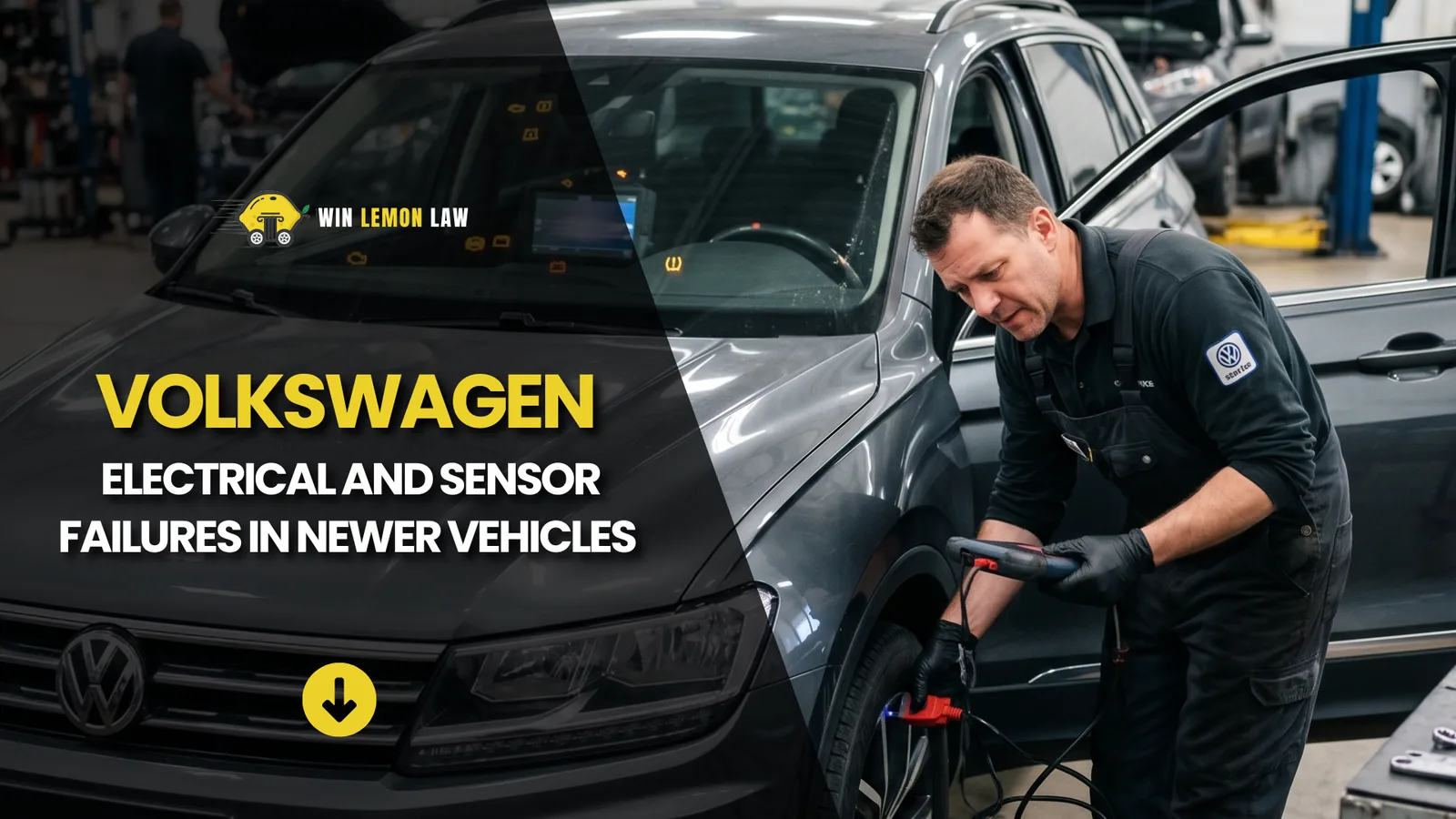
Volkswagen vehicles are widely recognized for their engineering, European design, and balance of performance and practicality. Many drivers choose Volkswagen expecting a refined driving experience supported by modern technology and advanced vehicle systems.
However, in newer Volkswagen models, a growing number of owners have reported ongoing issues involving electrical systems and sensor related failures. These problems can affect warning lights, driver assistance features, infotainment systems, and overall vehicle performance.
What makes these issues particularly frustrating is that they often do not appear consistently. A vehicle may function normally one day and experience multiple warning alerts or system failures the next. Even after dealership visits and attempted repairs, the same problems may return.
For drivers dealing with repeated electrical issues, the concern often shifts from inconvenience to reliability. When systems that control safety, performance, and communication do not function consistently, it raises serious questions about the vehicle’s condition and long term dependability.
Understanding how these issues develop and why they may persist is important for determining whether a Volkswagen vehicle may qualify under California Lemon Law.
How Modern Volkswagen Electrical Architecture Works

Modern Volkswagen vehicles rely on a complex electrical architecture made up of control modules, wiring networks, and sensors distributed throughout the vehicle. These systems communicate constantly through internal data networks.
Instead of operating as separate components, many systems are interconnected. The engine, transmission, braking system, infotainment system, and driver assistance features all rely on shared data.
This design allows for advanced functionality, but it also means that a fault in one area can affect multiple systems at once. A single communication error can trigger warning lights, disable features, or cause unexpected behavior.
Because of this interconnected structure, electrical issues are often more complicated than traditional mechanical problems.
Common Electrical Symptoms Drivers Experience
Drivers experiencing electrical problems in Volkswagen vehicles often report a wide range of symptoms. These may include warning lights appearing without clear cause, system alerts that come and go, or dashboard messages that do not correspond to any obvious issue.
Infotainment systems may freeze, restart, or fail to respond. Digital displays may flicker or go blank temporarily. Some drivers report losing access to navigation, Bluetooth connectivity, or climate controls.
Other issues involve power related problems, such as battery drain or difficulty starting the vehicle. These symptoms can vary in frequency and severity, but when they occur repeatedly, they indicate that something is not functioning correctly.
Sensor Failures and False System Warnings
Sensors play a critical role in how Volkswagen vehicles operate. They monitor vehicle speed, engine performance, braking conditions, and environmental factors.
When sensors fail or provide inaccurate data, the vehicle’s control systems may react incorrectly. This can lead to false warnings or unnecessary system responses.
For example, a faulty sensor may trigger alerts related to braking systems, stability control, or engine performance. In some cases, safety systems may disable themselves due to incorrect sensor readings.
These issues can create confusion for drivers, especially when warnings appear without any clear mechanical problem.
Why Electrical Problems Often Come and Go
Electrical issues are often intermittent because they depend on variables such as temperature, system load, and driving conditions. A connection that is slightly unstable may only cause problems under certain circumstances.
For example, a system may function normally during short drives but fail after extended use. A sensor may operate correctly in moderate temperatures but malfunction in extreme heat or cold.
Because these conditions are not always present during dealership inspections, the issue may not be detected. This inconsistency makes electrical problems some of the most difficult to diagnose.
The Growing Role of Software in System Behavior
Software plays a central role in managing electrical systems in newer Volkswagen vehicles. Control modules rely on programming to interpret data and coordinate system behavior.
When issues arise, dealerships often attempt to resolve them through software updates. These updates may improve system performance or address known issues.
However, software updates do not always provide a permanent solution. Drivers often report that problems return after some time, suggesting that the issue may involve hardware components or system integration.
This reliance on software adds another layer of complexity to electrical system problems.
Battery Drain and Power Management Issues
Battery related problems are another common concern in newer Volkswagen models. Some drivers experience unexpected battery drain, even when the vehicle is not in use.
This can be caused by electrical systems that fail to shut down properly or components that continue drawing power when the vehicle is off.
Repeated battery failures can lead to inconvenience and may require frequent replacements or jump starts. These issues can also be linked to broader electrical system faults.
When battery problems persist despite repairs, they may indicate a deeper issue within the vehicle’s electrical network.
How Electrical Failures Affect Driver Assistance Systems
Driver assistance systems rely heavily on sensors and electronic communication. Features such as lane assistance, adaptive cruise control, and collision warning systems depend on accurate data.
When sensors malfunction or communication errors occur, these systems may behave unpredictably. They may deactivate, provide false alerts, or fail to respond when needed.
Because these systems are designed to enhance safety, any inconsistency can be a serious concern. Drivers may lose confidence in the vehicle’s ability to perform safely.
Why Repairs Often Do Not Fully Resolve the Problem
Electrical repairs may involve replacing sensors, updating software, or resetting control modules. While these steps can address specific symptoms, they may not resolve the underlying issue.
If the problem involves communication between multiple systems, fixing one component may not be enough. Other parts of the system may still be affected.
This can lead to a cycle where symptoms temporarily improve but later return. Repeated repairs without lasting results suggest that the issue has not been fully diagnosed or resolved.
The Challenge of Diagnosing Intermittent Failures
Diagnosing intermittent electrical issues is one of the most difficult tasks for technicians. If the problem does not occur during inspection, it can be difficult to identify the cause.
Diagnostic tools rely on fault codes and observable symptoms. If the system does not register an error at the time of testing, the issue may go undetected.
This can result in multiple service visits where no clear problem is found, even though the driver continues to experience issues.
How These Problems Affect Daily Driving
Electrical and sensor issues can affect daily driving in subtle but important ways. Drivers may experience interruptions in infotainment systems, unexpected warning messages, or temporary loss of features.
These disruptions can create frustration and reduce convenience. Over time, they can also affect confidence in the vehicle’s reliability.
Even if the vehicle remains drivable, the presence of ongoing issues can make the driving experience less predictable and less enjoyable.
Long Term Reliability Concerns
Repeated electrical issues raise concerns about long term reliability. Drivers may worry about future repairs and the overall lifespan of the vehicle.
Because electrical systems are interconnected, unresolved issues can lead to additional problems over time. This can increase maintenance costs and reduce confidence in the vehicle.
Reliability is a key factor for most drivers, and ongoing electrical problems can undermine that expectation.
Impact on Vehicle Value
A vehicle with a history of electrical and sensor problems may lose value in the resale market. Potential buyers may be cautious about purchasing a vehicle with known issues.
Even if repairs have been attempted, the record of recurring problems can raise concerns about reliability.
California Lemon Law considers whether defects substantially impair a vehicle’s value, in addition to its use and safety.
Why These Issues Are Increasing in Modern Vehicles
As vehicles become more advanced, they rely more heavily on electronic systems. While this allows for greater functionality, it also increases the potential for complex issues.
Multiple systems must communicate accurately for the vehicle to function properly. When communication breaks down, it can affect several systems at once.
This complexity is a major reason why electrical and sensor issues are becoming more common in newer vehicles.
When Repeated Problems Indicate a Defective Vehicle
A key factor in evaluating these issues is the pattern of repair attempts. If a vehicle is brought in multiple times for electrical or sensor problems and the issue continues, it may indicate a deeper defect.
Repeated attempts to resolve warning lights, system failures, or performance issues without lasting improvement suggest that the vehicle is not functioning as intended.
This pattern is critical when determining whether the vehicle may qualify under California Lemon Law.
When Volkswagen Electrical Issues May Qualify Under California Lemon Law
California Lemon Law applies when a vehicle has a defect that substantially impairs its use, value, or safety and cannot be repaired after a reasonable number of attempts.
Electrical and sensor failures can meet this standard when they affect essential systems such as safety features, engine performance, or overall reliability.
Even if the vehicle remains operational, ongoing issues can significantly impact usability and confidence.
How Win Lemon Law Helps Volkswagen Owners
At Win Lemon Law, we help California drivers who are dealing with vehicles that do not stay fixed. Our team understands how electrical and sensor system issues are evaluated and how manufacturers respond to recurring problems.
We review repair histories, identify patterns of repeated issues, and determine whether the vehicle meets the legal standard under California Lemon Law.
If the case qualifies, potential outcomes may include a vehicle buyback, replacement vehicle, or financial compensation.
California Lemon Law generally requires manufacturers to pay attorney fees and costs in successful cases, allowing consumers to pursue their claims without additional financial burden.
Contact Win Lemon Law for Help With Volkswagen Electrical Issues
If your Volkswagen continues to experience electrical system failures, sensor malfunctions, or recurring warning lights that do not stay fixed, you may have rights under California Lemon Law.
Ongoing electrical problems can affect reliability, safety, and overall driving confidence. You should not have to deal with a vehicle that does not function as expected.
The experienced California Lemon Law attorneys at Win Lemon Law can review your repair history, explain your options clearly, and help determine whether your vehicle qualifies for relief.
Contact Win Lemon Law today for a free case evaluation.
Think you have a lemon?
Get a free case review — we only get paid if you win.
Related articles
Do All Repair Attempts Have to Be for the Same Problem to Qualify Under California Lemon Law
Many vehicle owners believe that in order to qualify under California Lemon Law, they must take their vehicle to the
Read more May 7, 2026Honda Transmission and Fuel Injector Problems in Newer Models
Honda vehicles have long been known for reliability, efficiency, and consistent performance. Many drivers choose Honda expecting a vehicle that
Read more May 5, 2026Can a Lemon Law Claim Be Filed After the Warranty Has Expired in California
Many vehicle owners believe that once a manufacturer’s warranty expires, their legal options disappear as well. This assumption often prevents
Read more