Honda Transmission and Fuel Injector Problems in Newer Models
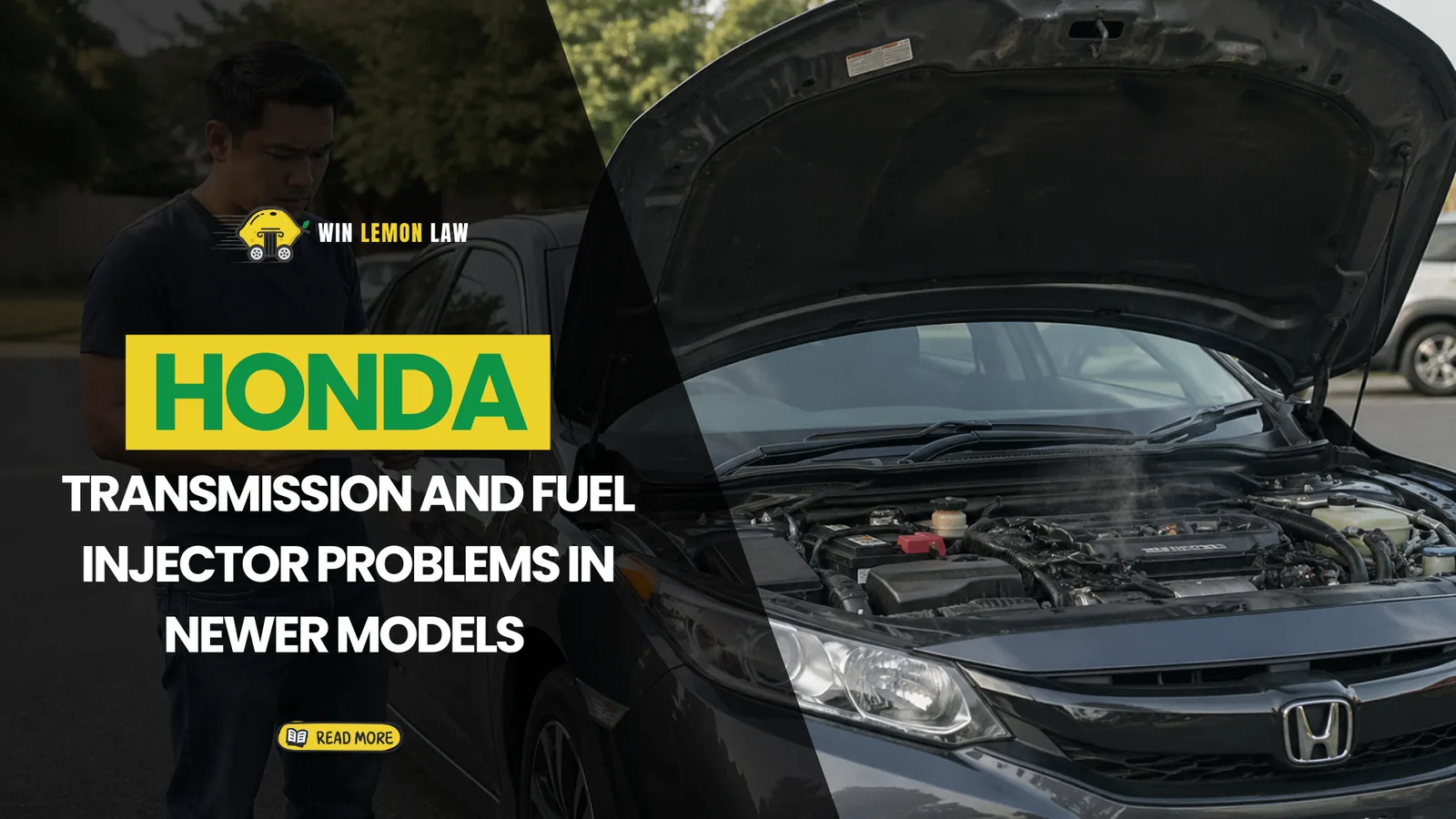
Honda vehicles have long been known for reliability, efficiency, and consistent performance. Many drivers choose Honda expecting a vehicle that performs smoothly for years with minimal issues. However, in recent years, some owners have reported ongoing concerns involving transmission behavior and fuel injector systems in newer models.
These issues can affect how the vehicle accelerates, idles, and responds during everyday driving. While symptoms may initially appear minor or inconsistent, they often become more noticeable over time and may continue despite dealership repair attempts.
For drivers experiencing repeated hesitation, misfires, or inconsistent performance, the issue may go beyond normal wear. When these problems do not stay fixed, they can impact reliability, drivability, and overall confidence in the vehicle. In California, this pattern may raise questions about whether the vehicle qualifies under Lemon Law.
Understanding how these issues develop and why they may persist is an important step in evaluating whether a Honda vehicle may qualify for relief.
How Transmission Issues First Appear During Normal Driving
Transmission related concerns in newer Honda vehicles often begin with subtle changes in driving behavior. Drivers may notice a delay when pressing the accelerator, especially from a complete stop.
In some cases, the vehicle may feel slow to respond, followed by a sudden surge in acceleration. This creates an inconsistent driving experience that can feel unpredictable.
Other drivers report jerking or uneven shifting during low speed driving. These symptoms may appear intermittently at first but can become more frequent over time.
Because these issues do not always occur consistently, they are sometimes dismissed as normal behavior. However, repeated hesitation or irregular response is not expected in a properly functioning transmission.
Fuel Injector Problems and Their Effect on Engine Stability
Fuel injectors are responsible for delivering the correct amount of fuel into the engine at precise intervals. When injectors do not function properly, the balance of fuel and air can be disrupted.
This imbalance can lead to rough idling, hesitation, reduced fuel efficiency, or engine misfires. In some cases, drivers may notice the vehicle struggling to maintain smooth operation at idle or during acceleration.
Fuel injector issues can also trigger warning lights, but not always. Some problems may exist without consistent fault codes, making diagnosis more difficult.
Even when injectors are cleaned or replaced, symptoms may return if the root cause has not been fully addressed.
Why These Issues Often Feel Inconsistent
One of the most frustrating aspects of these problems is their inconsistency. A vehicle may perform normally during one drive and exhibit noticeable issues during another.
Temperature, driving conditions, and engine load can all influence how the vehicle behaves. For example, hesitation may be more noticeable during cold starts or heavy traffic.
Because the issue does not always appear under the same conditions, it can be difficult for technicians to replicate during inspection. This often leads to situations where drivers are told the vehicle is operating normally.
However, inconsistency does not mean the problem is not real. It often indicates that the issue is developing or tied to specific operating conditions.
The Link Between Fuel Delivery and Transmission Response
Transmission performance depends heavily on how the engine delivers power. When fuel injectors do not provide consistent fuel flow, engine output can fluctuate.
These fluctuations can affect how the transmission engages and shifts. A hesitation caused by fuel delivery issues may feel like a transmission problem.
Similarly, uneven power output can create jerking or delayed response during acceleration. This overlap between systems can make it difficult to determine whether the issue originates in the engine, transmission, or both.
Because these systems are closely connected, resolving one issue may not fully correct the overall problem.
Why Software Updates Do Not Always Solve the Issue
Modern Honda vehicles rely heavily on software to control engine and transmission behavior. Dealerships often attempt to address performance issues through system updates or recalibration.
While these updates may improve performance temporarily, they do not always provide a lasting fix. Drivers often report that hesitation or misfires return after a period of normal operation.
This pattern suggests that the issue may involve more than just calibration. Mechanical wear, component interaction, or deeper system faults may be contributing to the problem.
When software updates fail to resolve the issue permanently, it becomes clear that additional factors are involved.
How Driving Conditions Reveal Hidden Problems
Certain driving situations tend to make these issues more noticeable. Stop and go traffic, frequent acceleration, and highway merging require consistent power delivery.
Under these conditions, hesitation or delayed response becomes more apparent. Drivers may feel that the vehicle is not reacting quickly enough when needed.
Cold starts can also reveal rough idling or misfires related to fuel injectors. As the engine warms up, symptoms may change, making the issue seem inconsistent.
These variations highlight that the vehicle is not performing reliably across different conditions.
Why Some Repairs Only Provide Temporary Relief
Dealerships may attempt various repairs, including injector replacement, transmission recalibration, or system updates. While these efforts may improve performance temporarily, they do not always resolve the underlying issue.
In some cases, repairs focus on the most obvious symptom rather than the root cause. For example, replacing injectors may not address underlying system imbalances.
Similarly, recalibrating the transmission may improve shifting behavior for a short period but may not prevent the issue from returning.
This cycle of temporary improvement followed by recurring problems is a key indicator that the vehicle is not being properly repaired.
The Impact on Driver Confidence and Control
When a vehicle does not respond consistently, it affects more than just performance. It changes how drivers feel behind the wheel.
Hesitation during acceleration can create uncertainty in situations that require quick response. Jerking or uneven power delivery can make the vehicle feel unstable.
Over time, drivers may lose confidence in the vehicle’s ability to perform as expected. This can lead to more cautious driving behavior and reduced satisfaction with the vehicle.
This loss of confidence reflects a broader issue with reliability.
Long Term Reliability Concerns
Repeated transmission and fuel system issues raise concerns about long term durability. Drivers may question whether the vehicle will continue to perform reliably in the future.
Even if the vehicle remains drivable, ongoing issues suggest that the system is not functioning as intended. This can lead to concerns about future repairs and overall lifespan.
Reliability is one of the primary reasons consumers choose Honda. When that expectation is not met, it can significantly impact the ownership experience.
How These Issues Affect Vehicle Value
A vehicle with a history of transmission or fuel system problems may be less appealing to potential buyers. Recurring issues can raise questions about long term reliability.
Even if repairs have been attempted, the presence of ongoing problems can reduce resale value. Buyers may be hesitant to invest in a vehicle with known performance concerns.
California Lemon Law considers whether defects substantially impair a vehicle’s value in addition to its use and safety.
Why These Problems Are Becoming More Common
As vehicles become more advanced, systems are increasingly interconnected. Engine performance, fuel delivery, and transmission behavior are all controlled by integrated systems.
While this improves efficiency, it also increases complexity. A problem in one system can affect multiple areas of the vehicle.
This complexity makes diagnosis more challenging and increases the likelihood of recurring issues. It also explains why some problems are not resolved through traditional repair methods.
When Repeated Repairs Indicate a Deeper Defect
A key factor in evaluating these issues is the pattern of repair attempts. If a vehicle is brought in multiple times for similar concerns and the problem continues, it suggests a deeper defect.
Repeated attempts to fix hesitation, misfires, or performance inconsistencies without lasting improvement indicate that the vehicle is not functioning as intended.
This pattern is critical when determining whether the vehicle may qualify under California Lemon Law.
When These Issues May Qualify Under California Lemon Law
California Lemon Law applies when a vehicle has a defect that substantially impairs its use, value, or safety and cannot be repaired after a reasonable number of attempts.
Transmission hesitation and fuel injector problems can meet this standard when they affect how the vehicle accelerates, performs, or responds during normal driving.
Even if the vehicle remains operational, inconsistent performance can significantly impact its usability.
How Win Lemon Law Helps Honda Owners
At Win Lemon Law, we help California drivers who are dealing with vehicles that do not stay fixed. Our team understands how transmission and fuel system issues are evaluated and how manufacturers respond to recurring problems.
We review repair histories, identify patterns of repeated issues, and determine whether the vehicle meets the legal standard under California Lemon Law.
If the case qualifies, potential outcomes may include a vehicle buyback, replacement vehicle, or financial compensation.
California Lemon Law generally requires manufacturers to pay attorney fees and costs in successful cases, allowing consumers to pursue their claims without additional financial burden.
Contact Win Lemon Law for Help With Honda Transmission and Fuel System Problems
If your Honda continues to experience transmission hesitation, fuel injector issues, or inconsistent performance that does not stay fixed, you may have rights under California Lemon Law.
Ongoing performance problems can affect reliability, safety, and overall driving confidence. You should not have to deal with a vehicle that does not perform as expected.
The experienced California Lemon Law attorneys at Win Lemon Law can review your repair history, explain your options clearly, and help determine whether your vehicle qualifies for relief.
Contact Win Lemon Law today for a free case evaluation.
Think you have a lemon?
Get a free case review — we only get paid if you win.
Related articles
Can a Lemon Law Claim Be Filed After the Warranty Has Expired in California
Many vehicle owners believe that once a manufacturer’s warranty expires, their legal options disappear as well. This assumption often prevents
Read more April 30, 2026Subaru CVT Transmission Hesitation and Reliability Issues in Newer Models
Subaru vehicles are known for their all wheel drive capability, practicality, and reputation for reliability. Many drivers choose Subaru…
Read more April 28, 2026When a Vehicle Is Still Drivable but Legally a Lemon in California
Many vehicle owners assume that a car must completely break down before it qualifies as a lemon. This belief is
Read more