Can a Lemon Law Claim Be Filed After the Warranty Has Expired in California
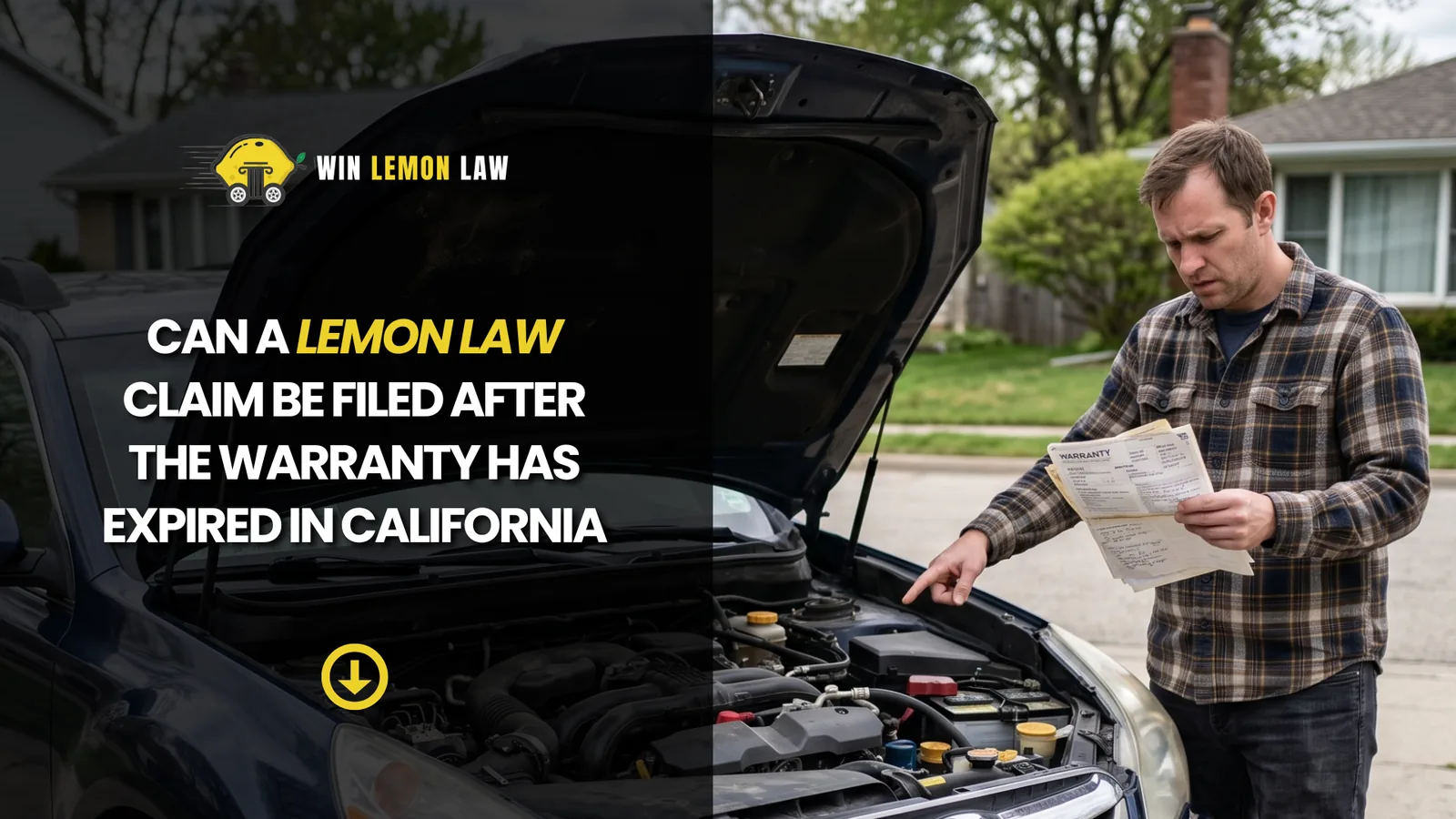
Many vehicle owners believe that once a manufacturer’s warranty expires, their legal options disappear as well. This assumption often prevents drivers from exploring whether they may still have a valid Lemon Law claim.

In reality, the expiration of a warranty does not automatically eliminate your rights under California Lemon Law. What matters most is when the defect first appeared, when it was reported, and whether the manufacturer had a reasonable opportunity to repair it while the vehicle was still covered.
This distinction is critical. A vehicle that develops problems during the warranty period and continues to experience those issues afterward may still qualify for relief, even if the warranty has since expired.
Understanding how timing works under California Lemon Law can help drivers determine whether they still have a viable claim after warranty coverage ends.
Why Timing Matters More Than Current Warranty Status
The most important question is not always whether the warranty is active today. The more important question is whether the defect began while the warranty was still in effect.
If a problem was reported during the warranty period, that creates a record showing the manufacturer had responsibility for the issue. If the same problem continues afterward, the claim may still remain valid.
This means a vehicle does not lose protection simply because time has passed. The focus is on the history of the defect and whether the manufacturer failed to provide a lasting repair when it had the chance to do so.
Defects That Begin Under Warranty Can Continue to Qualify
Many vehicle problems do not disappear after one repair visit. Some issues return after temporary fixes. Others get worse over time.
For example, a transmission hesitation may begin while the vehicle is still covered by warranty, then continue after the warranty expires. The same can happen with electrical failures, recurring warning lights, engine problems, software defects, or safety system malfunctions.
If the defect is connected to the same issue that was reported earlier, the expiration of the warranty does not necessarily end the claim.
Why the First Repair Visit Is So Important
The first repair visit often plays a major role in a Lemon Law case. It helps establish when the defect was first reported and whether the manufacturer was given a chance to fix it.
If the first complaint was made while the warranty was active, that date may help support the claim even if later repairs happen after the warranty expires.
This is why repair history matters so much in post warranty cases. The earlier records can show that the problem was not new, sudden, or unrelated. Instead, they can show that the issue began during the period when the manufacturer was responsible for the vehicle.
When Temporary Repairs Create Confusion
Some drivers believe their claim is over because a repair seemed to work for a while. The vehicle may operate normally for weeks or months before the same issue returns.
This does not always mean the defect was actually fixed. A temporary repair may only mask the problem. If the same symptoms return, it may show that the original defect was never fully resolved.
This is especially common with software updates, engine adjustments, electrical resets, and intermittent transmission concerns. The issue may disappear briefly, then return later in a stronger or more obvious way.
How Manufacturers May Respond After Warranty Expiration
Once a warranty expires, manufacturers may argue that they are no longer responsible for the vehicle. Drivers may be told that any future repairs must be paid for out of pocket.
That response may be incomplete if the defect began under warranty. California Lemon Law focuses on whether the manufacturer failed to repair a covered defect after a reasonable number of opportunities.
If the manufacturer had those opportunities during the warranty period and the problem continued, the claim may still have value.
New Problems Versus Continuing Problems
There is an important difference between a brand new issue and a continuing defect.
A new issue that first appears after the warranty expires may be harder to pursue under Lemon Law. However, a defect that began during warranty coverage and continued afterward is different.
For example, if a vehicle had repeated transmission complaints under warranty and the same transmission symptoms continue later, that may support a claim. But if an unrelated air conditioning issue appears for the first time years later, that may not have the same legal significance.
The connection between the earlier complaints and the current problem is what matters.
Why Drivers Often Wait Too Long
Many consumers wait because they trust the dealership to eventually fix the problem. They may believe another update, inspection, or replacement part will finally resolve the issue.
Others delay because they do not realize California Lemon Law may apply. By the time they start asking questions, the warranty may already be expired.
Waiting does not always destroy a claim, but it can make the case more complicated. The longer the delay, the more important it becomes to review the repair history carefully.
How Mileage Can Affect the Case
Mileage can create confusion in post warranty claims. Some owners assume that once their vehicle has higher mileage, it can no longer qualify.
Mileage may affect certain calculations, but it does not automatically prevent a claim. If the defect began during the warranty period and was reported properly, the vehicle may still qualify.
The issue is whether the manufacturer failed to repair the defect when it was responsible for doing so. Additional mileage after that point does not erase the earlier repair history.
When Repeated Repairs Show a Pattern
Repeated repairs are often one of the strongest indicators that a defect was not properly resolved. If the same symptoms continue across multiple visits, it suggests the manufacturer did not provide a lasting solution.
This pattern can be especially important when the warranty has expired. Earlier repair attempts help show that the issue was not caused by later wear or misuse.
The more consistent the repair history is, the easier it may be to show that the defect began while the vehicle was still covered.
Why Post Warranty Claims Are Often Misunderstood
Post warranty claims are misunderstood because many consumers think warranty expiration is an absolute deadline. In practice, the analysis is more detailed.
A warranty determines when the manufacturer was required to repair covered defects. Lemon Law looks at whether the manufacturer fulfilled that obligation.
If a manufacturer failed to fix a defect during the warranty period, the fact that coverage later ended does not automatically protect the manufacturer from responsibility.
What If the Dealership Kept Saying the Issue Was Normal
Some drivers are told during the warranty period that the issue is normal, cannot be duplicated, or does not require repair. Later, the problem becomes more serious after the warranty expires.
Those early visits may still matter. They can show that the owner tried to address the issue while the warranty was active.
A dealership’s inability or refusal to diagnose the problem does not automatically defeat a claim. If the symptoms were reported under warranty and later continued, the earlier records may still support the case.
How Complex Vehicle Technology Affects Post Warranty Claims
Modern vehicles rely heavily on software, sensors, electrical systems, and control modules. These systems can create problems that are hard to diagnose at first.
A warning light may appear and disappear. A software issue may return after updates. A safety system may fail intermittently.
Because these issues can take time to identify, some defects continue beyond the warranty period before the full scope becomes clear. This is one reason post warranty claims are increasingly common with newer vehicles.
When a Claim May Still Be Worth Reviewing
A post warranty claim may still be worth reviewing if the same problem was reported during warranty coverage, if the vehicle had repeated repair attempts, if the issue returned after temporary fixes, or if the defect continues to affect reliability, safety, or value.
Even if the warranty has expired, drivers should not assume they have no options. A careful review of the repair history is often the only way to know whether the claim remains valid.
How Win Lemon Law Helps With Post Warranty Claims
At Win Lemon Law, we help California drivers understand whether a vehicle problem that began under warranty may still support a Lemon Law claim after coverage has expired.
Our team reviews the full repair timeline, including when the issue first appeared, how many times the vehicle was brought in for service, and whether the defect continued after repairs.
We evaluate whether the manufacturer had a reasonable opportunity to repair the vehicle and whether the defect substantially affected the vehicle’s use, value, or safety.
If the case qualifies, potential outcomes may include a vehicle buyback, replacement vehicle, or financial compensation.
California Lemon Law generally requires manufacturers to pay attorney fees and costs in successful cases, allowing consumers to pursue their claims without additional financial burden.
Contact Win Lemon Law for Help With Post Warranty Lemon Law Claims

If your vehicle developed problems during the warranty period and those issues continue today, you may still have rights under California Lemon Law.
You should not assume that your claim is no longer valid simply because your warranty has expired.
The experienced California Lemon Law attorneys at Win Lemon Law can review your repair history, explain your options clearly, and help determine whether your vehicle qualifies for relief.
Contact Win Lemon Law today for a free case evaluation.
Think you have a lemon?
Get a free case review — we only get paid if you win.
Related articles
Subaru CVT Transmission Hesitation and Reliability Issues in Newer Models
Subaru vehicles are known for their all wheel drive capability, practicality, and reputation for reliability. Many drivers choose Subaru…
Read more April 28, 2026When a Vehicle Is Still Drivable but Legally a Lemon in California
Many vehicle owners assume that a car must completely break down before it qualifies as a lemon. This belief is
Read more April 23, 2026Mercedes-Benz Suspension and Air Ride Failures in Newer Models
Mercedes-Benz vehicles are known for their smooth ride quality, luxury feel, and advanced engineering. One of the key features that
Read more