When a Vehicle Is Still Drivable but Legally a Lemon in California
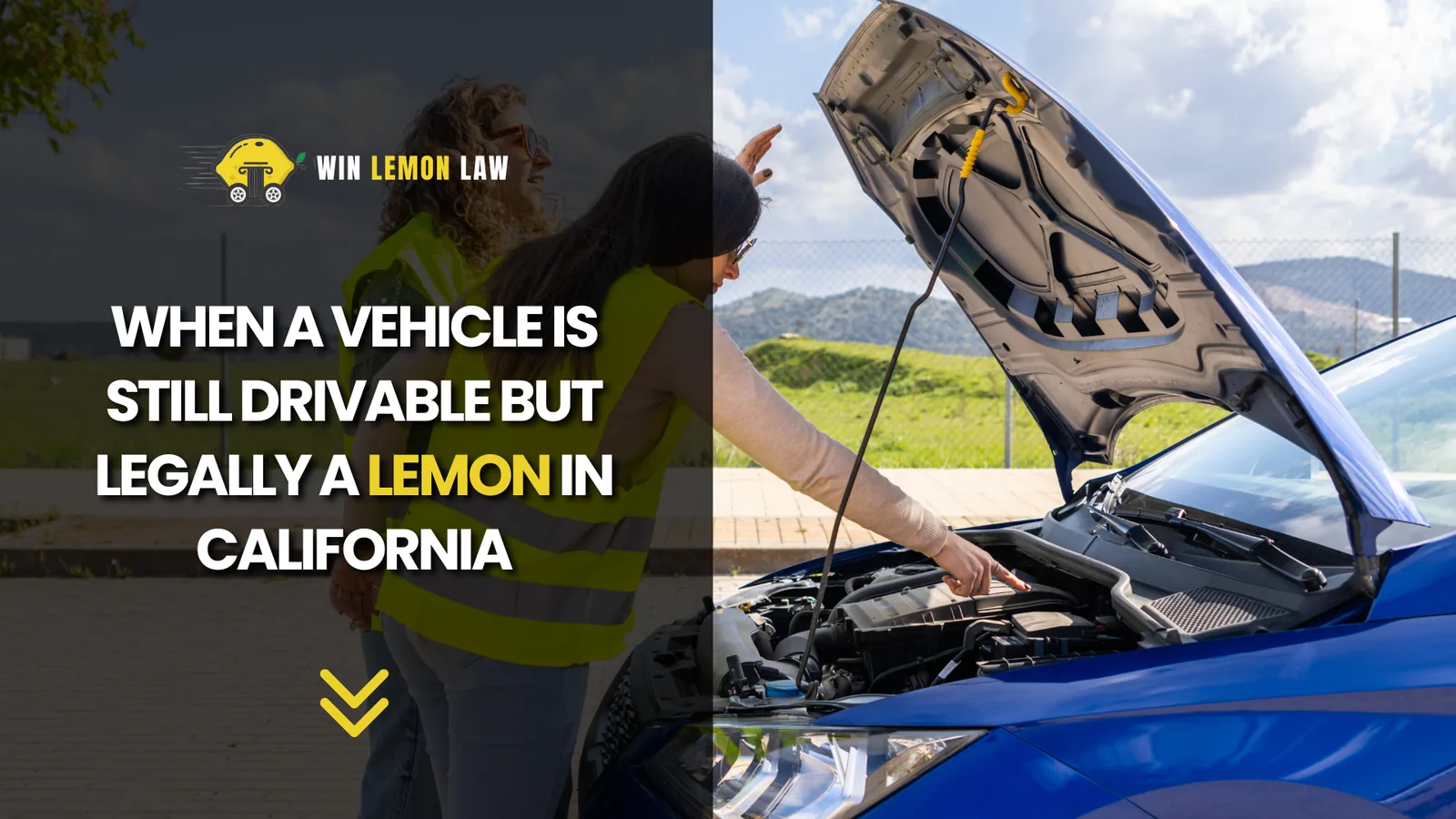
Many vehicle owners assume that a car must completely break down before it qualifies as a lemon. This belief is common, especially when a vehicle still starts, drives, and appears functional on the surface. If the car is not stranded on the side of the road, it is easy to assume that the issue is not serious enough to trigger legal protection.
However, California Lemon Law does not require a vehicle to be completely inoperable. In fact, many qualifying cases involve vehicles that are still drivable but suffer from ongoing defects that affect reliability, safety, or overall performance.
A vehicle can continue to operate while still falling short of what consumers reasonably expect. When problems persist despite repair attempts and interfere with daily use or value, the law may provide a path toward relief.
Understanding how a drivable vehicle can still qualify as a lemon is important for drivers who feel stuck with a car that works but does not perform as it should.
Why Drivability Does Not Equal Reliability
A vehicle being drivable simply means it can move and operate. It does not mean that it is functioning properly or reliably. Many serious issues allow a vehicle to continue running while still creating problems for the driver.
For example, a car may start and drive but hesitate during acceleration, lose power unexpectedly, or display recurring warning messages. These issues may not prevent the vehicle from moving, but they can make driving unpredictable and frustrating.
Reliability is about consistency and dependability. A vehicle that cannot be trusted to perform the same way every time it is driven does not meet that standard, even if it technically still runs.
How Ongoing Defects Affect Everyday Use
When a vehicle has persistent issues, it can begin to interfere with daily life. Drivers may need to plan around the problem or adjust how they use the vehicle.
For example, hesitation during acceleration can make merging onto highways more difficult. Electrical issues may cause features like navigation, backup cameras, or driver assistance systems to malfunction.
These disruptions may seem manageable at first, but over time they can affect convenience, comfort, and overall confidence in the vehicle.
California Lemon Law considers whether a defect substantially impairs the vehicle’s use. Even if the car is still drivable, these ongoing issues can meet that standard.
The Difference Between Minor Annoyances and Legal Defects
Not every issue qualifies under Lemon Law. Minor inconveniences that do not affect the vehicle’s performance or safety are generally not enough.
The key distinction is whether the problem has a meaningful impact on how the vehicle is used or how it performs. A cosmetic issue or a small inconvenience may not qualify, but a recurring mechanical or electrical problem may.
For example, a persistent transmission hesitation, repeated warning lights, or braking inconsistencies can all affect the vehicle’s usability.
Understanding this difference helps drivers determine whether their situation may fall within the scope of the law.
When Safety Is A Concern Even Without a Breakdown
A vehicle does not need to stop working entirely to create safety risks. Many defects affect systems that are critical to safe operation.
For example, issues with acceleration, braking, steering, or driver assistance features can increase the risk of accidents. Even if these problems occur intermittently, they can still be significant.
Drivers may feel uncertain about how the vehicle will respond in certain situations. This lack of predictability can create stress and reduce confidence behind the wheel.
California Lemon Law takes safety into account, even when the vehicle remains operational.
Why Manufacturers May Downplay Drivable Issues
Manufacturers and dealerships may emphasize that a vehicle is still drivable as a way to minimize concerns. Drivers may be told that the issue is not serious because the car continues to operate.
While this may be technically true, it does not address the underlying problem. A vehicle that continues to exhibit defects is not functioning as intended, regardless of whether it can still be driven.
This distinction is important when evaluating whether a defect qualifies under Lemon Law.
The Role of Repeat Repair Attempts
A key element of any Lemon Law claim is the number of repair attempts. Even if a vehicle is still drivable, repeated visits to the dealership for the same issue can indicate that the problem has not been resolved.
Each repair attempt demonstrates that the manufacturer has had an opportunity to fix the defect. When those attempts do not lead to a lasting solution, it strengthens the case.
The law focuses on whether the manufacturer has been able to repair the defect within a reasonable number of attempts.
Why Some Issues Never Fully Go Away
Certain defects may improve temporarily after a repair but return later. This cycle can make it seem like the problem has been fixed, only for it to reappear.
For example, software updates may temporarily resolve warning messages, or mechanical adjustments may reduce symptoms for a short period of time.
When the issue continues to return, it indicates that the underlying cause has not been addressed. This pattern is important when evaluating whether the vehicle qualifies as a lemon.
How Ongoing Problems Affect Vehicle Value
A vehicle with a history of recurring issues may be worth less than one that operates normally. Potential buyers may be hesitant to purchase a car with known problems.
Even if the vehicle is still drivable, the presence of defects can reduce its market value. This impact on value is one of the factors considered under California Lemon Law.
Drivers should not have to accept a loss in value due to defects that the manufacturer cannot fix.
The Psychological Impact of Driving an Unreliable Vehicle
Beyond the physical issues, driving a vehicle with ongoing problems can create stress and frustration. Drivers may constantly worry about when the next issue will occur.
This uncertainty can affect the overall ownership experience. A vehicle that cannot be relied upon consistently can become a source of anxiety rather than convenience.
While this aspect is not always discussed, it reflects the broader impact of ongoing defects.
When Time in the Shop Becomes a Factor
Even if a vehicle is still drivable, frequent trips to the dealership can disrupt daily life. Scheduling repairs, arranging transportation, and dealing with delays can be time consuming.
If a vehicle spends a significant amount of time being repaired, it may meet the criteria for Lemon Law regardless of whether it remains operational.
This factor highlights that the law considers more than just whether the car can be driven.
How Modern Technology Has Changed Lemon Law Cases

Modern vehicles rely heavily on electronic systems and software. These systems can create issues that do not always result in complete failure but still affect performance.
For example, problems with sensors, control modules, or software updates can lead to inconsistent behavior. These issues may not disable the vehicle but can still impact how it functions.
As a result, more Lemon Law cases now involve vehicles that are still drivable but have persistent defects.
Recognizing When the Vehicle Is Not Performing as Promised
At some point, drivers may realize that their vehicle is not meeting expectations. Even if it continues to run, it may not provide the reliability or performance that was promised.
This realization often comes after repeated repair attempts and ongoing issues. Drivers may begin to question whether the problem will ever be fully resolved.
Recognizing this point is an important step in exploring legal options.
Why Drivable Vehicles Can Still Qualify Under California Lemon Law
California Lemon Law is designed to protect consumers from defective vehicles, not just inoperable ones. The focus is on whether the defect substantially impairs the vehicle’s use, value, or safety.
A vehicle that continues to experience recurring problems despite repair attempts may meet this standard, even if it can still be driven.
The law recognizes that consumers should not have to accept ongoing issues simply because the vehicle remains operational.
How Win Lemon Law Helps Drivers With Ongoing Vehicle Issues
At Win Lemon Law, we help California drivers who are dealing with vehicles that do not stay fixed. Our team understands that many qualifying cases involve vehicles that are still drivable but have persistent defects.
We review repair histories, evaluate how the issues affect use and value, and determine whether the vehicle meets the legal standard for a Lemon Law claim.
If the case qualifies, potential outcomes may include a vehicle buyback, replacement vehicle, or financial compensation.
California Lemon Law generally requires manufacturers to pay attorney fees and costs in successful cases, allowing consumers to pursue their claims without additional financial burden.
Contact Win Lemon Law for Help With Drivable but Defective Vehicles

If your vehicle continues to experience problems but is still drivable, you may still have rights under California Lemon Law.
You should not have to accept a vehicle that works only part of the time or fails to perform reliably.
The experienced California Lemon Law attorneys at Win Lemon Law can review your repair history, explain your options clearly, and help determine whether your vehicle qualifies for relief.
Contact Win Lemon Law today for a free case evaluation.
Think you have a lemon?
Get a free case review — we only get paid if you win.
Related articles
Mercedes-Benz Suspension and Air Ride Failures in Newer Models
Mercedes-Benz vehicles are known for their smooth ride quality, luxury feel, and advanced engineering. One of the key features that
Read more April 21, 2026Can Multiple Minor Defects Together Qualify a Vehicle as a Lemon in California
Many California drivers assume that a vehicle must suffer from a single major failure to qualify under Lemon Law. Issues
Read more April 16, 2026BMW Electrical System Malfunctions and Warning Messages That Do Not Stay Fixed
BMW vehicles are widely recognized for their performance, engineering, and advanced technology. Modern BMW models are equipped with complex…
Read more