What Happens If You Stop Driving a Defective Vehicle Before Filing a Lemon Law Claim in California
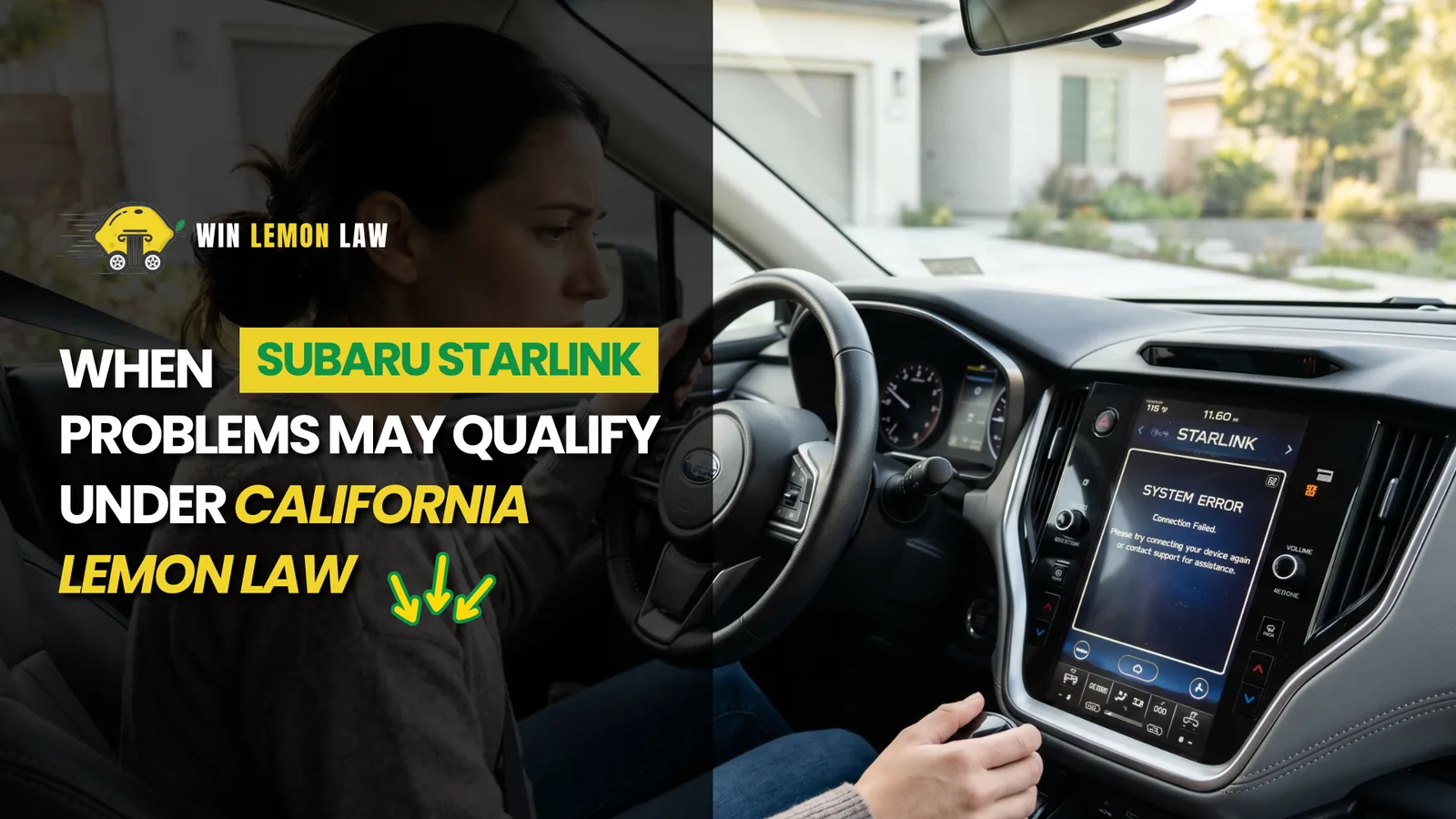
When a vehicle begins to experience ongoing problems, many drivers reach a point where they no longer feel comfortable using it. The issue may affect reliability, performance, or even safety. In some cases, the problem becomes so frustrating that the driver chooses to stop driving the vehicle altogether.
This decision often leads to an important question. If you stop driving a defective vehicle before filing a Lemon Law claim, does it hurt your case?
The answer depends on several factors. California Lemon Law focuses on the history of the defect, the repair attempts made, and how the issue affects the vehicle’s use, value, or safety. Whether the vehicle is currently being driven is not the primary factor in determining eligibility.
Understanding how stopping use of a defective vehicle affects a claim can help drivers make informed decisions without worrying that they are giving up their rights.
Why Drivers Reach a Breaking Point With Defective Vehicles
Most drivers do not immediately stop using their vehicle when a problem first appears. Instead, they try to work through the issue by scheduling repairs and giving the dealership an opportunity to fix it.
Over time, repeated failures to resolve the problem can lead to frustration. Drivers may begin to lose confidence in the vehicle’s ability to perform consistently.
In some situations, the issue may escalate to the point where it feels unsafe or unpredictable. At that stage, continuing to drive the vehicle may no longer feel like a reasonable option.
This decision is often not about convenience. It reflects a loss of trust in the vehicle’s reliability.
Does Stopping Use Affect Lemon Law Eligibility
Stopping use of the vehicle does not automatically disqualify a Lemon Law claim. The law focuses on whether the vehicle has a defect and whether the manufacturer had a reasonable opportunity to repair it.
If the defect was present and repair attempts were made, those factors remain the foundation of the claim. Whether the vehicle is currently being driven does not change that history.
In fact, stopping use can sometimes highlight how serious the issue has become. A vehicle that is no longer considered reliable enough to drive may clearly demonstrate impairment of use.
When Stopping Use May Be the Safer Decision
There are situations where continuing to drive a defective vehicle may create unnecessary risk. Problems involving braking, steering, acceleration, or system failures can affect safe operation.
If a driver feels uncertain about how the vehicle will respond, choosing not to drive it can be a practical and responsible decision.
Even issues that are not immediately dangerous can create stress and unpredictability. Drivers may avoid certain roads, speeds, or driving conditions because they do not trust the vehicle.
Stopping use in these situations reflects the real impact of the defect on daily life.
How Repair History Remains the Key Factor
The most important element of any Lemon Law claim is the repair history. This includes how many times the vehicle was brought in, what issues were reported, and whether the problem was resolved.
Even if the vehicle is no longer being driven, this history does not change. Each repair attempt shows that the manufacturer had an opportunity to fix the defect.
If those attempts did not result in a lasting solution, it supports the claim that the vehicle is defective.
Stopping use does not erase or weaken that record.
The Difference Between Reduced Use and Complete Non Use
Some drivers stop using their vehicle entirely, while others simply reduce how often they drive it. Both situations can occur when confidence in the vehicle declines.
Reduced use may involve avoiding long trips, highways, or certain driving conditions. Complete non use may occur when the driver no longer feels comfortable driving the vehicle at all.
Both scenarios demonstrate how the defect affects the vehicle’s usability. The key issue is not the level of use, but the reason behind it.
How Manufacturers May Try to Interpret Non Use
Manufacturers may attempt to argue that if a vehicle is not being driven, the issue may not be severe. They may suggest that the lack of use indicates the problem is not affecting the vehicle significantly.
However, this argument often overlooks the reason why the vehicle is not being used. If the driver stopped using it because of reliability or safety concerns, that decision actually supports the seriousness of the defect.
The focus remains on the defect and its impact, not on whether the vehicle is currently in use.
The Importance of Continuing Documentation
When a vehicle is no longer being driven, maintaining documentation becomes even more important. Repair records, service reports, and communication with the dealership all help establish the history of the issue.
Drivers should keep records of all prior repair attempts and any ongoing concerns. Even if the vehicle is not currently being used, this documentation provides evidence of the defect.
Clear records help demonstrate that the problem existed and was not resolved.
Should You Continue Seeking Repairs
After stopping use, some drivers wonder whether they should continue taking the vehicle in for repairs. Additional repair attempts can strengthen a claim by showing continued efforts to resolve the issue.
However, there may be a point where further repairs are unlikely to produce a different result. If multiple attempts have already been made, the existing history may be sufficient.
The decision to continue repairs depends on the specific circumstances and how the issue has been handled so far.
The Role of Time and Delays in Filing a Claim
Delaying a claim after stopping use can raise questions about timing. However, the key issue remains when the defect occurred and whether it was reported during the warranty period.
Even if some time has passed, the claim may still be valid if the defect was properly documented earlier.
That said, acting sooner rather than later can make the process more straightforward. The longer the delay, the more important it becomes to clearly show the connection between the original defect and the current condition.
How Non Use Highlights Loss of Value
A vehicle that is not being used due to ongoing problems may lose practical value. Even if it is technically operational, its usefulness is limited.
Potential buyers may also view a non used vehicle with known issues as less desirable. This can affect resale value and overall market perception.
California Lemon Law considers whether defects impair value, and non use can be a reflection of that impact.
Storage and Maintenance Considerations
If a vehicle is not being driven, it is still important to maintain it in reasonable condition. Basic maintenance, such as battery care and proper storage, can prevent additional issues.
This helps ensure that the vehicle’s condition does not change in ways unrelated to the original defect.
Maintaining the vehicle also supports the integrity of the claim by showing that the issue is not caused by neglect.
Emotional and Practical Impact on Drivers
Stopping use of a vehicle often has both practical and emotional effects. Drivers may need to find alternative transportation, which can create inconvenience and additional expense.
There is also the frustration of owning a vehicle that cannot be relied upon. This can affect daily routines and overall satisfaction.
These impacts highlight how the defect goes beyond a simple inconvenience and affects the driver’s overall experience.
When These Situations May Qualify Under California Lemon Law
A vehicle may qualify under California Lemon Law if it has a defect that substantially impairs its use, value, or safety and cannot be repaired after a reasonable number of attempts.
Stopping use of the vehicle does not prevent it from meeting this standard. In many cases, it reflects how the defect has affected the vehicle’s usability.
The key factors remain the defect itself and the manufacturer’s inability to fix it.
Frequently Asked Questions About Stopping Use of a Defective Vehicle

Will stopping driving my vehicle hurt my claim?
No. The claim is based on the defect and repair history, not current use.
Should I continue driving the vehicle?
If the issue affects safety or reliability, stopping use may be a reasonable decision.
Do I need additional repair attempts
Not always. If enough attempts have already been made, further repairs may not be necessary.
Can the manufacturer argue against my claim because I stopped using the vehicle?
They may try, but the reason for stopping use often supports the seriousness of the defect.
Does the vehicle need to be completely inoperable?
No. A vehicle can qualify even if it is still drivable, as long as the defect affects its use, value, or safety.
How Win Lemon Law Helps in These Situations
At Win Lemon Law, we help California drivers who are dealing with defective vehicles, including those they no longer feel comfortable driving.
We review repair histories, evaluate how the defect affects the vehicle, and determine whether the case meets the requirements under California Lemon Law.
We understand that stopping use of a vehicle can be a practical response to ongoing problems, not a limitation on your rights.
If the case qualifies, potential outcomes may include a vehicle buyback, replacement vehicle, or financial compensation.
California Lemon Law generally requires manufacturers to pay attorney fees and costs in successful cases, allowing consumers to pursue their claims without additional financial burden.
Contact Win Lemon Law for Help With Defective Vehicles You No Longer Drive
If you have stopped driving your vehicle due to ongoing problems, you may still have rights under California Lemon Law.
You should not assume that your claim is affected simply because the vehicle is no longer in use.
The experienced California Lemon Law attorneys at Win Lemon Law can review your repair history, explain your options clearly, and help determine whether your vehicle qualifies for relief.
Contact Win Lemon Law today for a free case evaluation.
Think you have a lemon?
Get a free case review — we only get paid if you win.
Related articles
Mazda Infotainment and Connectivity Failures in Newer Models
Mazda vehicles have built a strong reputation for delivering a refined driving experience, modern design, and a balance between performance
Read more May 19, 2026Can You File a Lemon Law Claim Without Warning Lights or Error Codes in California
Many vehicle owners assume that if their car does not display a warning light or generate an error code, there
Read more May 14, 2026Volkswagen Electrical and Sensor Failures in Newer Vehicles
Volkswagen vehicles are widely recognized for their engineering, European design, and balance of performance and practicality. Many drivers…
Read more