Lexus Safety System and Sensor Malfunctions That Continue After Repairs
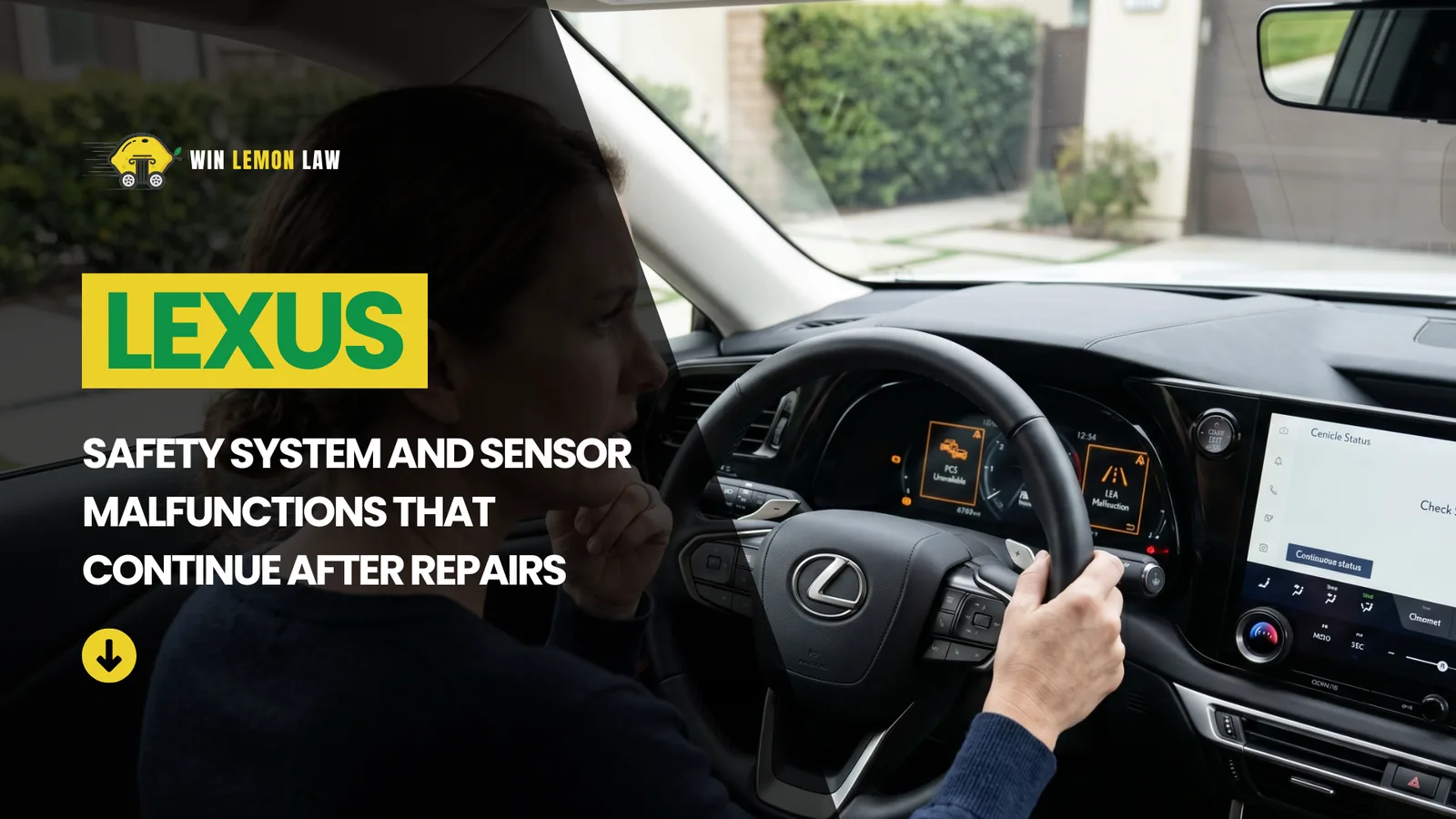
Lexus has built a reputation for luxury, comfort, and reliability. For many consumers, purchasing a Lexus means investing in a vehicle expected to provide a premium ownership experience along with advanced safety technology designed to help prevent accidents and improve driver confidence.

In recent years, Lexus has equipped many of its vehicles with sophisticated driver assistance systems that rely on cameras, radar sensors, electronic control modules, and software integration. These technologies are intended to help drivers remain aware of their surroundings and respond to potential hazards more effectively.
While these systems offer valuable benefits, some owners have reported recurring problems involving safety features, sensor operation, warning messages, and system malfunctions that continue despite dealership visits and repair attempts.
Unlike traditional mechanical issues, safety system defects often involve a combination of hardware, software, and electronic communication. This complexity can make diagnosis difficult and may lead to situations where the same problem returns after repairs have already been performed.
For Lexus owners experiencing recurring safety system failures, understanding how these issues develop and why they sometimes remain unresolved can help determine whether the vehicle may qualify for relief under California Lemon Law.
The Expanding Role of Driver Assistance Technology
Modern vehicles contain far more technology than vehicles produced just a decade ago.
Many Lexus models now include advanced safety features designed to assist drivers during everyday operation. These systems rely on continuous monitoring of road conditions, surrounding vehicles, traffic patterns, and driver inputs.
To accomplish this, Lexus vehicles use multiple cameras, radar sensors, electronic modules, and software systems working together simultaneously.
The effectiveness of these technologies depends on accurate communication between every component involved. When one part of the system experiences a problem, the effects can extend far beyond a single feature.
This interconnected design is one reason why recurring safety system issues can be difficult to isolate and repair.
Understanding How Lexus Safety Systems Operate
Many Lexus vehicles include technologies that monitor surrounding traffic, lane positioning, vehicle speed, and potential collision risks.
These systems continuously process information collected through sensors and cameras positioned throughout the vehicle.
The information is analyzed in real time and used to provide warnings, alerts, or corrective actions when necessary.
Because these features operate constantly while driving, owners often become aware of problems quickly when something does not function as expected.
Unexpected alerts, unavailable systems, or inconsistent operation can create confusion and concern, particularly when the issue appears repeatedly.
False Collision Warnings and Unexpected Alerts
One of the more frustrating complaints reported by some owners involves false warnings.
Drivers may receive collision alerts even when no apparent hazard exists. Warning messages may appear unexpectedly during routine driving situations without any obvious reason.
False alerts can be more than a simple annoyance. Over time, repeated warnings may reduce driver confidence in the system’s accuracy.
When drivers begin questioning whether alerts represent genuine hazards, the usefulness of the technology may become diminished.
Repeated false warnings may also indicate underlying issues involving sensors, calibration, software processing, or system communication.
Lane Departure System Problems
Lane departure technologies are intended to help drivers remain aware of their position within traffic lanes.
When functioning correctly, these systems can provide warnings or assistance when the vehicle begins moving outside lane boundaries without signaling.
However, some owners report situations where lane related warnings appear unexpectedly or fail to activate when expected.
Inconsistent operation can create uncertainty regarding whether the system is functioning properly.
Because these features rely heavily on cameras, sensors, and software interpretation, identifying the exact source of the problem can be challenging.
Adaptive Cruise Control Concerns

Adaptive cruise control systems rely on sensors and radar technology to monitor surrounding traffic and automatically adjust vehicle speed.
When these systems function correctly, they can improve driving convenience and reduce driver workload during longer trips.
However, recurring issues involving adaptive cruise control can affect driver confidence.
Some owners report unexpected disengagements, warning messages, inconsistent distance control, or temporary loss of functionality.
When these concerns continue after repair attempts, they may indicate broader issues involving sensor performance or electronic communication.
Radar Sensor Related Problems
Radar sensors serve as a critical component in many modern driver assistance systems.
These sensors help monitor traffic conditions and provide information used by multiple safety features.
Because so many functions depend on radar data, problems involving radar sensors can affect several systems simultaneously.
Drivers may receive multiple warning messages or experience reduced functionality across different safety features at the same time.
This overlap often makes diagnosis more difficult because symptoms may appear unrelated despite sharing a common cause.
Camera System Reliability Concerns
Cameras play an increasingly important role in modern vehicle safety systems.
These components assist with lane monitoring, traffic recognition, parking assistance, and other advanced functions.
When camera systems malfunction, drivers may encounter warning messages indicating that certain safety features are temporarily unavailable.
In some situations, the problem may appear intermittently, functioning normally one day and failing the next.
Intermittent camera related issues are particularly difficult because they may not be present when the vehicle is inspected.
Why Sensor Calibration Can Become a Recurring Issue
Many advanced safety systems require precise calibration.
After repairs, component replacements, or certain maintenance procedures, sensors and cameras may need recalibration to ensure accurate operation.
While calibration procedures are designed to restore proper functionality, they do not always provide a permanent solution.
Some owners report recurring issues even after calibration has been performed multiple times.
When warning messages continue returning after repeated adjustments, it may indicate a more significant underlying problem.
Software and Electronic Communication Challenges
Modern safety systems depend on constant communication between numerous electronic modules.

Sensors collect information, control modules process that information, and software determines how the vehicle should respond.
When communication problems occur, safety systems may become temporarily unavailable or generate unexpected warnings.
Software related issues can be particularly difficult to diagnose because they often occur under specific conditions and may not leave obvious physical evidence.
As vehicles become increasingly dependent on software, these types of concerns continue becoming more common.
The Difficulty of Diagnosing Intermittent Safety System Failures
One of the most challenging aspects of safety system defects is their intermittent nature.
A warning message may appear briefly and then disappear. A system may stop functioning temporarily before returning to normal operation.
By the time the vehicle reaches the dealership, the problem may no longer be present.
This can create frustration for both drivers and technicians. Owners know something is wrong, but reproducing the exact circumstances that triggered the issue may be difficult.
As a result, some vehicles undergo multiple inspections before a clear diagnosis is reached.
How Repeated Repairs Can Affect Owner Confidence
When a vehicle returns to the dealership multiple times for the same concern, owners naturally begin questioning whether the issue can truly be fixed.
Each repair attempt raises expectations that the problem will finally be resolved.
When warning messages return or systems continue malfunctioning, confidence in the vehicle often begins to decline.
This is especially true when the issue involves features specifically designed to improve safety.
Many consumers purchase luxury vehicles expecting a higher level of reliability and consistency.
Recurring defects can undermine those expectations.
The Impact on Everyday Driving
Safety system problems affect more than technical performance.
Many drivers rely on these technologies during daily commutes, long trips, and heavy traffic situations.
When systems become unavailable or produce inconsistent results, drivers may lose access to features they have come to depend on.
The resulting inconvenience can alter how owners use and perceive their vehicles.
Even if the vehicle remains drivable, repeated system failures can affect the overall ownership experience.
Long Term Reliability Concerns
Consumers often purchase Lexus vehicles with the expectation of long term dependability.
Recurring safety system issues can create concerns about future reliability, particularly when the same problems continue despite repair efforts.
Owners may begin wondering whether additional electronic or technology related issues will emerge over time.
These concerns can affect satisfaction, ownership confidence, and future purchasing decisions.
Reliability remains one of the most important considerations for many vehicle buyers.
How Recurring Safety System Problems Affect Vehicle Value
Technology and safety features have become major selling points in today’s automotive market.
Potential buyers expect these systems to function properly and consistently.
A vehicle with a documented history of recurring safety system problems may become less attractive to future buyers.
Concerns regarding ongoing repairs, warning messages, or unresolved defects can influence purchasing decisions.
California Lemon Law recognizes that defects may impair a vehicle’s value in addition to affecting its use or safety.
When Recurring Sensor Problems Suggest a Larger Defect
An occasional warning message does not necessarily indicate a defective vehicle.
However, repeated alerts, recurring repairs, ongoing sensor failures, and persistent system malfunctions may point toward a broader issue.
Patterns often become more important than individual incidents.
When similar concerns continue returning despite dealership efforts, it becomes reasonable to question whether the underlying defect can be permanently repaired.
Repeated failures can demonstrate that the problem extends beyond a single isolated event.
Why Technology Related Lemon Law Claims Continue to Increase
As vehicles become more technologically advanced, the nature of vehicle defects continues to evolve.
In the past, most Lemon Law claims involved mechanical systems such as engines or transmissions.
Today, software, sensors, cameras, electronic modules, and advanced driver assistance systems play a much larger role.
This shift has created new categories of recurring defects that can significantly affect vehicle ownership.
The legal standards remain the same even as vehicle technology becomes increasingly sophisticated.
When Lexus Safety System Problems May Qualify Under California Lemon Law
California Lemon Law applies when a vehicle contains a defect that substantially impairs its use, value, or safety and the manufacturer cannot repair the issue after a reasonable number of attempts.
Recurring safety system failures, sensor malfunctions, camera issues, warning message problems, and driver assistance defects may potentially qualify when they significantly affect vehicle operation and continue despite repair efforts.
Each case depends on its specific facts, repair history, and the overall impact of the defect.
A pattern of recurring problems often becomes one of the most important factors in evaluating a potential claim.
How Win Lemon Law Helps Lexus Owners
At Win Lemon Law, we help California consumers dealing with vehicles that continue experiencing problems despite multiple repair attempts.
Our team reviews repair histories, identifies recurring patterns, and evaluates whether a vehicle may qualify under California Lemon Law.
We understand how technology related defects differ from traditional mechanical issues and how manufacturers approach these claims.
If the case qualifies, potential outcomes may include a vehicle buyback, replacement vehicle, or financial compensation.
California Lemon Law generally requires manufacturers to pay attorney fees and costs in successful cases, allowing consumers to pursue claims without additional financial burden.
Contact Win Lemon Law for a Free Case Evaluation
If your Lexus continues experiencing safety system failures, sensor malfunctions, warning message issues, or recurring driver assistance problems that do not stay fixed, you may have rights under California Lemon Law.
You should not have to continue dealing with a vehicle that repeatedly fails to perform as expected.
The experienced California Lemon Law attorneys at Win Lemon Law can review your repair history, explain your options, and determine whether your vehicle may qualify for relief.
Contact Win Lemon Law today for a free case evaluation.
Think you have a lemon?
Get a free case review — we only get paid if you win.
Related articles
Can a Vehicle Still Qualify Under California Lemon Law if the Defect Happens Only Occasionally?
Many vehicle owners assume that a defect must occur every day or every time they drive their vehicle to qualify
Read more June 4, 2026Subaru STARLINK, Infotainment, and Connectivity Problems in Newer Subaru Models
Subaru has built a loyal customer base by offering vehicles known for practicality, safety, and all wheel drive capability. In
Read more June 2, 2026How Long a Lemon Law Case Takes in California From Start to Finish
When a vehicle continues to have problems that cannot be fixed, many drivers begin to look into their legal options
Read more