Can a Vehicle Still Qualify Under California Lemon Law if the Defect Happens Only Occasionally?
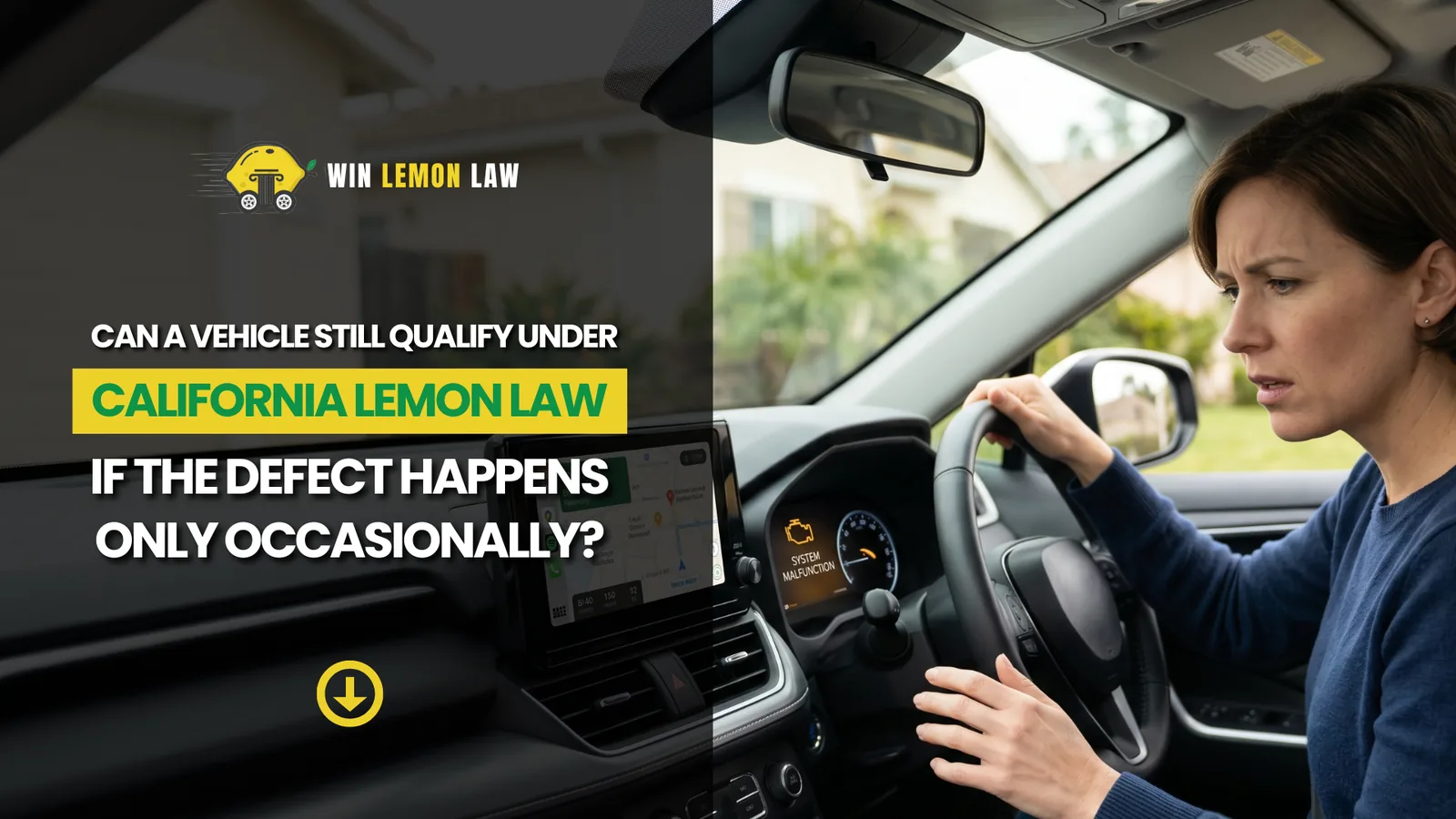

Many vehicle owners assume that a defect must occur every day or every time they drive their vehicle to qualify under California Lemon Law. This misconception often causes consumers to delay seeking legal advice or assume they do not have a valid claim.
In reality, many vehicle defects are intermittent. They may appear unexpectedly, disappear for a period of time, and then return without warning. Some problems only occur under certain driving conditions, temperatures, speeds, or operating circumstances. Others may seem resolved after a repair attempt, only to reappear weeks or months later.
These types of defects can be particularly frustrating because they are often difficult to diagnose and even harder to repair. Drivers know something is wrong, yet dealerships may struggle to recreate the issue during an inspection.
The good news for California consumers is that a defect does not have to occur constantly to qualify under Lemon Law. What matters is the impact the defect has on the vehicle and whether the manufacturer has been given a reasonable opportunity to repair it.
Understanding how intermittent defects are evaluated can help vehicle owners determine whether they may still have rights under California Lemon Law.
Why Intermittent Defects Are Common in Modern Vehicles
Modern vehicles are more technologically advanced than ever before. They rely on complex networks of sensors, software, control modules, and electronic systems that constantly communicate with one another.
While these systems provide improved performance and convenience, they also create more opportunities for intermittent problems.
A defective sensor may provide inaccurate information only under certain conditions. A software issue may cause unexpected behavior that occurs sporadically. Electrical components may function normally most of the time but fail occasionally due to temperature changes or system loads.
Because of this complexity, intermittent defects have become increasingly common in newer vehicles.
Unlike traditional mechanical failures, these issues may not follow a predictable pattern, making them difficult for both drivers and technicians to identify.
What Makes an Intermittent Defect So Frustrating
One of the biggest challenges with intermittent defects is that they often occur at the worst possible times.
A vehicle may hesitate while merging onto a busy highway, trigger warning lights during a long trip, or experience a sudden system failure during daily commuting. Then, when the driver brings the vehicle to the dealership, the problem may disappear completely.
This creates frustration because the driver experiences the defect firsthand, yet there may be no obvious evidence when the vehicle is inspected.
In some cases, drivers are told that no problem could be found. In others, technicians may acknowledge the complaint but cannot recreate the issue during testing.
This cycle can repeat multiple times, leaving the owner with a vehicle that still does not function properly.
Does a Defect Need to Happen Every Day to Qualify?
California Lemon Law does not require a defect to occur every day.
The law focuses on whether the defect substantially impairs the vehicle’s use, value, or safety and whether the manufacturer has had a reasonable opportunity to repair it.
An issue that occurs once a week, once a month, or only under specific circumstances may still qualify if it significantly affects the vehicle.
For example, a vehicle that occasionally loses power while driving may present a serious safety concern even if the problem occurs infrequently.
Similarly, an intermittent braking issue may still substantially impair the vehicle despite not occurring every time it is driven.
The key question is not how often the problem occurs but how it affects the vehicle and whether it can be successfully repaired.
Why Frequency Is Only One Part of the Analysis
Many consumers focus exclusively on frequency when evaluating whether they have a Lemon Law claim.
While frequency is relevant, it is only one factor among many.
A defect that occurs every day may be less serious than a defect that occurs only occasionally but creates significant safety risks.
For example, a radio that occasionally freezes may be inconvenient. A steering system that intermittently loses responsiveness is a very different situation.
The severity of the issue often matters more than how frequently it occurs.
This is why intermittent defects can still qualify under California Lemon Law even when they are not constantly present.
The Importance of Repair Attempts
A key component of California Lemon Law is giving the manufacturer a reasonable opportunity to repair the defect.
This requirement applies whether the problem is constant or intermittent.
Each time a vehicle is brought in for repair, the complaint is documented. These repair records become important evidence showing that the owner repeatedly sought help for the issue.
Even if technicians cannot recreate the problem during every visit, the fact that the complaint was reported and documented can still be valuable.
Over time, multiple repair visits can demonstrate a pattern that supports a Lemon Law claim.
Why Dealerships Often Struggle With Intermittent Problems
Dealership technicians rely on observation, testing, and diagnostic equipment to identify defects.
Intermittent problems create unique challenges because they may not be active during the inspection.
A vehicle that experiences warning lights once every few weeks may appear completely normal when examined. Similarly, an electrical issue that occurs only under specific conditions may not appear during a standard test drive.
This does not mean the defect does not exist.
It simply means that the problem is difficult to recreate.
Many successful Lemon Law claims involve defects that technicians initially struggled to identify.
How Drivers Can Help Document Intermittent Issues
When dealing with an intermittent defect, documentation becomes especially important.
Drivers should report every occurrence to the dealership and make sure the concern is accurately recorded on repair orders.
It is also helpful to keep personal notes about when the problem occurs, what conditions were present, and how the vehicle behaved.
Details such as weather conditions, vehicle speed, warning messages, and driving circumstances may help establish patterns over time.
The more information available, the easier it becomes to demonstrate that the issue is real and ongoing.
Safety Related Defects Often Require Fewer Occurrences
Some defects are so serious that they may qualify under California Lemon Law even if they occur only occasionally.
Safety related issues are a prime example.
A vehicle that experiences intermittent braking failures, steering issues, sudden stalling, or unexpected loss of power may present substantial safety risks.
Because these defects can endanger drivers, passengers, and others on the road, their seriousness may outweigh their infrequency.
The law recognizes that a defect does not need to happen every day to create significant safety concerns.
How Intermittent Defects Affect Vehicle Value
Even if a vehicle remains drivable, intermittent defects can significantly affect its value.
Potential buyers may be reluctant to purchase a vehicle with a history of recurring problems. Ongoing defects can create concerns about reliability and future repair costs.
This impact on value is one of the factors considered under California Lemon Law.
A vehicle does not have to become completely unusable to qualify. A substantial reduction in value may also support a claim.
Why Some Defects Appear to Be Fixed Before Returning
One of the most frustrating aspects of intermittent problems is that they sometimes appear to be repaired successfully.
After a service visit, the vehicle may function normally for days, weeks, or even months. Then the same issue suddenly returns.
This temporary improvement can make it difficult to determine whether the repair actually worked.
In many cases, the underlying defect was never fully resolved. The repair may have addressed a symptom rather than the root cause.
When the problem returns, it becomes further evidence that the vehicle may not have been properly repaired.
The Difference Between Normal Variations and Actual Defects
Manufacturers sometimes argue that certain behaviors are normal characteristics of the vehicle.
While some variations in performance are expected, genuine defects are different.
A vehicle that occasionally behaves in a way that affects safety, reliability, or normal operation may have a defect even if the issue is difficult to reproduce.
Determining the difference often requires reviewing the repair history and evaluating the overall impact on the vehicle.
Frequently Asked Questions

Can a vehicle qualify if the defect only happens once every few weeks?
Yes. A defect does not need to occur daily. If it substantially affects the vehicle and cannot be repaired, it may still qualify.
What if the dealership says they cannot duplicate the problem?
This does not automatically prevent a Lemon Law claim. Many intermittent defects are difficult to recreate, yet they can still support a claim when properly documented.
Do warning lights need to stay on continuously?
No. Warning lights that appear and disappear may still indicate an underlying defect.
Can intermittent electrical issues qualify under Lemon Law?
Yes. Electrical problems are among the most common intermittent defects reported by vehicle owners.
What if the problem disappeared after a repair but later returned?
A defect that returns after repair attempts may strengthen the argument that the vehicle has not been successfully repaired.
How Win Lemon Law Helps With Intermittent Defect Cases
At Win Lemon Law, we understand that not every defect occurs every day. Many of the vehicles we evaluate involve problems that appear sporadically, making them difficult to diagnose and repair.
Our team reviews repair histories, identifies patterns, and evaluates how recurring issues affect the vehicle’s use, value, and safety.
We understand how manufacturers and dealerships approach intermittent defects and know how to assess whether a vehicle may qualify under California Lemon Law.
If the case qualifies, potential outcomes may include a vehicle buyback, replacement vehicle, or financial compensation.
California Lemon Law generally requires manufacturers to pay attorney fees and costs in successful cases, allowing consumers to pursue their claims without additional financial burden.
Contact Win Lemon Law for a Free Case Evaluation
If your vehicle has an ongoing problem that comes and goes, do not assume you are automatically disqualified from California Lemon Law protection.
Intermittent defects can still have a major impact on safety, reliability, and value. The fact that a problem does not occur every day does not mean it is insignificant.
The experienced California Lemon Law attorneys at Win Lemon Law can review your repair history, explain your options, and determine whether your vehicle may qualify for relief.
Contact Win Lemon Law today for a free case evaluation.
Think you have a lemon?
Get a free case review — we only get paid if you win.
Related articles
Subaru STARLINK, Infotainment, and Connectivity Problems in Newer Subaru Models
Subaru has built a loyal customer base by offering vehicles known for practicality, safety, and all wheel drive capability. In
Read more June 2, 2026How Long a Lemon Law Case Takes in California From Start to Finish
When a vehicle continues to have problems that cannot be fixed, many drivers begin to look into their legal options
Read more May 28, 2026Chevrolet Electrical System Failures That Do Not Stay Fixed
Chevrolet vehicles are known for their versatility, offering a wide range of cars, trucks, and sport utility vehicles designed to
Read more