Subaru STARLINK, Infotainment, and Connectivity Problems in Newer Subaru Models
Subaru has built a loyal customer base by offering vehicles known for practicality, safety, and all wheel drive capability. In recent years, the manufacturer has also placed significant emphasis on technology, introducing advanced infotainment systems, connected vehicle services, and driver assistance features designed to improve the ownership experience.
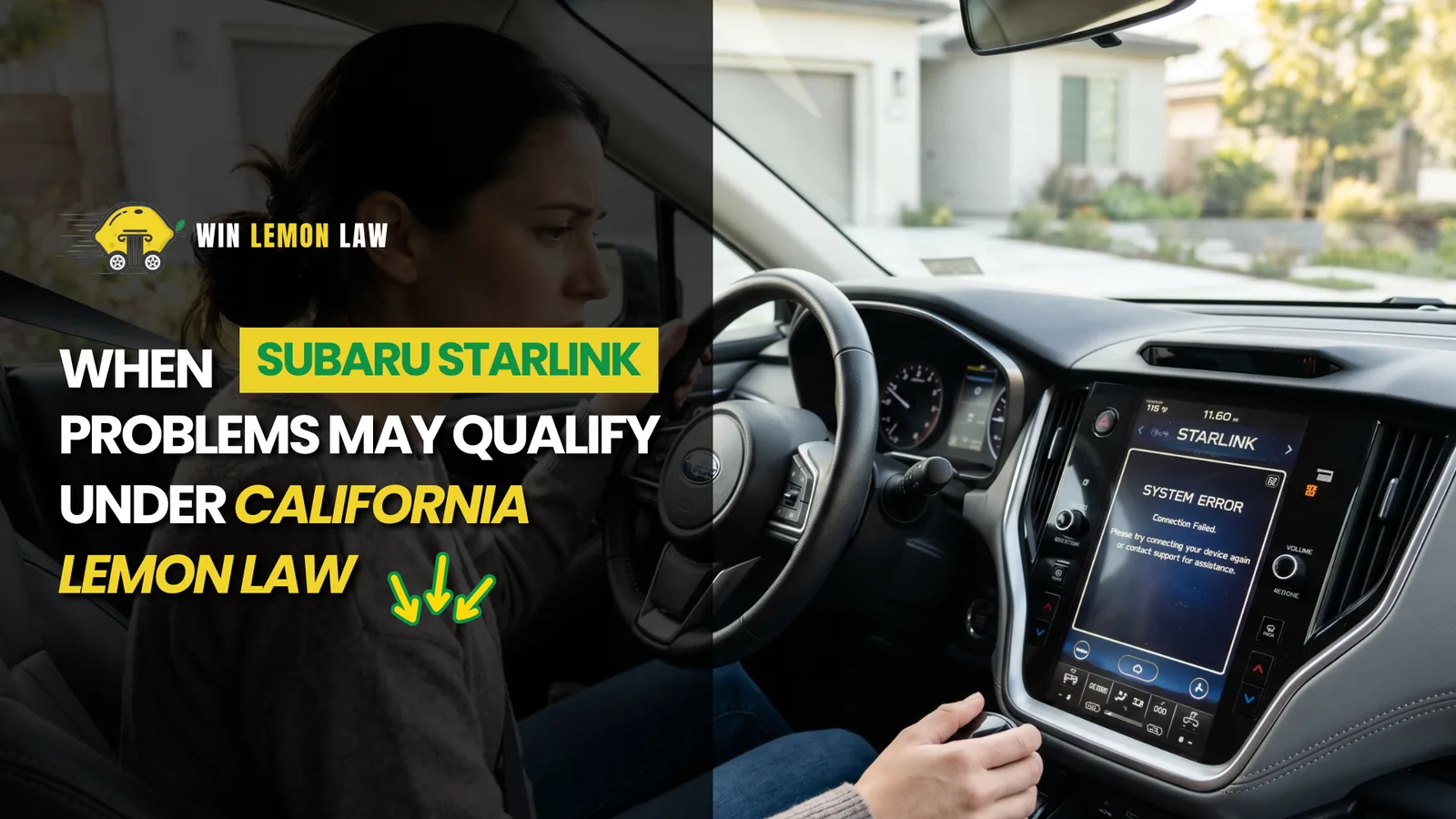
At the center of many of these features is the Subaru STARLINK system. STARLINK serves as the technology platform that connects infotainment functions, communication tools, smartphone integration, navigation services, and certain vehicle monitoring features.
While these systems are intended to provide convenience and connectivity, some Subaru owners have reported recurring problems involving STARLINK functionality, infotainment performance, and connected services. In some situations, these issues continue even after dealership visits, software updates, and repair attempts.
Technology related problems can be particularly frustrating because they often affect features drivers use every day. When these issues repeatedly return, they may significantly impact the vehicle’s use, value, and overall ownership experience.
Understanding how these problems develop and why they sometimes remain unresolved can help Subaru owners determine whether they may have rights under California Lemon Law.
The Growing Importance of Technology in Modern Subaru Vehicles
Modern vehicles rely on technology more than ever before. Features that once operated independently are now integrated through centralized systems and software platforms.
In newer Subaru models, the STARLINK platform acts as a gateway for numerous vehicle functions. Drivers may use it for navigation, media controls, smartphone connectivity, communication features, vehicle settings, and access to certain safety related information.
Because so many functions are connected through a single system, problems affecting STARLINK can impact multiple aspects of the driving experience simultaneously.
A failure that begins as a simple connectivity issue may eventually affect navigation, communication, or driver convenience features that owners rely on every day.
Common Complaints Involving Subaru STARLINK Systems
Subaru owners have reported a variety of issues involving STARLINK and infotainment functionality.
Some drivers experience screens freezing or becoming unresponsive. Others report system lag, delayed startup times, or sudden restarts while driving.
Connectivity related problems are also frequently discussed. These may include difficulty pairing smartphones, dropped connections, failed synchronization, or inconsistent performance when using mobile applications.
In certain cases, navigation functions may behave unpredictably or connected services may stop working altogether.
While any single issue may seem minor, recurring technology problems can become increasingly disruptive over time.
Why Infotainment Issues Can Be Difficult to Diagnose
Technology related defects often differ from traditional mechanical problems.

A failed engine component typically produces consistent symptoms that technicians can observe. Software related issues are often less predictable.
A system may function normally during one trip and then malfunction during the next. The problem may disappear before a technician has an opportunity to inspect the vehicle.
This inconsistency can make diagnosis difficult. Drivers may repeatedly report the same concern while technicians struggle to recreate the issue.
The result can be a cycle of dealership visits without a permanent resolution.
Smartphone Integration Problems
One of the most common areas of concern involves smartphone integration.
Drivers increasingly rely on connected features for navigation, communication, and entertainment. When these systems do not function properly, daily convenience is affected.
Some owners report difficulty connecting devices. Others experience random disconnections while driving.
In some situations, the vehicle may fail to recognize previously connected devices. Drivers may need to repeatedly reconnect their phones or reset system settings.
These interruptions can become frustrating, particularly for owners who depend on smartphone connectivity during daily travel.
Software Updates That Do Not Solve the Problem
Dealerships frequently address infotainment concerns through software updates.
Software updates can improve performance, correct known issues, and introduce new functionality. However, they do not always provide a permanent solution.
Some Subaru owners report that system performance improves temporarily following an update, only for the same problems to return later.
This pattern can suggest that the underlying issue extends beyond a simple software bug.
When repeated updates fail to resolve recurring problems, owners often begin to question the reliability of the entire system.
STARLINK Connected Services Failures
STARLINK includes connected services designed to provide additional functionality beyond traditional infotainment features.
These services may include remote access functions, vehicle information tools, emergency communication features, and other connected capabilities.
When these services fail, drivers may lose access to functions they expected to be available throughout ownership.
Some owners report intermittent connectivity issues that affect the availability of these services. Others describe situations where connected features stop functioning entirely.
Because many of these services depend on communication between multiple systems, diagnosing the root cause can be challenging.
Driver Assistance Systems and Communication Errors
Many modern Subaru vehicles include advanced driver assistance technologies.
These systems rely on accurate communication between sensors, cameras, software platforms, and vehicle control modules.
When communication problems occur, drivers may receive warning messages, unexpected alerts, or system errors.
In some cases, safety related features may become temporarily unavailable until the system resets.
Although these problems may not occur constantly, their intermittent nature can make them particularly frustrating and concerning.
Why Intermittent Technology Problems Are So Frustrating
Intermittent problems create unique challenges because they often appear without warning.
A driver may experience a system failure one day and find the system operating normally the next.
This unpredictability makes it difficult to determine whether a repair was successful. It can also make it difficult for technicians to recreate the problem during inspections.
As a result, owners may feel caught between repeated failures and a lack of definitive answers.
The Effect on Daily Vehicle Use
Technology issues may not prevent a vehicle from moving, but they can still have a significant impact on daily use.
Drivers expect navigation systems to function reliably. They expect communication features to remain connected. They expect vehicle settings and controls to respond appropriately.
When these expectations are not met, convenience is reduced and frustration increases.
Over time, repeated disruptions can change how owners view their vehicles and their overall ownership experience.
Long Term Reliability Concerns
Many owners become concerned about what recurring technology problems may indicate about long term reliability.
If a vehicle experiences repeated software, connectivity, or infotainment failures early in ownership, drivers may question what future issues may develop.
These concerns are understandable. Modern vehicles rely heavily on integrated systems, meaning unresolved technology problems can create uncertainty about future performance.
Reliability remains one of the most important factors influencing customer satisfaction and vehicle value.
How These Issues Affect Vehicle Value
Technology features play an increasingly important role in the value of modern vehicles.
Potential buyers expect infotainment systems, connectivity features, and driver assistance technologies to function properly.
A vehicle with a documented history of recurring technology problems may be viewed less favorably by future buyers.
Even if the vehicle remains operational, ongoing issues can affect its perceived value in the marketplace.
California Lemon Law recognizes that defects may affect a vehicle’s value in addition to its use and safety.
When Recurring Technology Problems May Indicate a Larger Defect
One isolated software glitch does not necessarily indicate a defective vehicle.
However, repeated complaints, multiple repair attempts, recurring failures, and ongoing performance issues can paint a different picture.
When technology related problems continue despite dealership efforts, owners may reasonably question whether the vehicle can be repaired successfully.
The pattern of repeated issues often becomes more important than any single failure.
When Subaru STARLINK Problems May Qualify Under California Lemon Law
California Lemon Law applies when a vehicle contains a defect that substantially impairs its use, value, or safety and cannot be repaired after a reasonable number of attempts.
Technology related defects can sometimes satisfy this standard.
While infotainment problems may initially appear less serious than mechanical failures, their impact can become substantial when they affect daily operation, connected services, communication functions, or safety related systems.
Each case depends on its specific facts, repair history, and the overall impact of the defect.
Frequently Asked Questions

Can infotainment problems qualify under California Lemon Law?
Yes. Technology related defects may qualify if they substantially impair the vehicle’s use, value, or safety and remain unresolved after reasonable repair attempts.
Do software updates count as repair attempts?
In many situations, software updates performed to address a reported issue may be part of the repair history considered when evaluating a claim.
What if the problem only happens occasionally?
Intermittent problems may still qualify. Many technology related defects do not occur consistently but continue returning despite repair attempts.
Do connectivity issues matter if the vehicle still drives?
Potentially. California Lemon Law considers use and value in addition to safety. Significant recurring technology issues may affect both.
What records should owners keep?
Repair orders, dealership communications, service invoices, and documentation of recurring issues can all be helpful when evaluating a potential claim.
How Win Lemon Law Helps Subaru Owners
At Win Lemon Law, we help California consumers dealing with vehicles that continue experiencing problems despite repeated repair attempts.
Our team reviews repair histories, identifies patterns of recurring defects, and evaluates whether the vehicle may qualify under California Lemon Law.
We understand the challenges associated with technology related vehicle defects and how manufacturers often approach these claims.
If the case qualifies, potential outcomes may include a vehicle buyback, replacement vehicle, or financial compensation.
California Lemon Law generally requires manufacturers to pay attorney fees and costs in successful cases, allowing consumers to pursue claims without additional financial burden.
Contact Win Lemon Law for a Free Case Evaluation
If your Subaru continues experiencing STARLINK problems, infotainment failures, connectivity issues, or recurring technology related defects that do not stay fixed, you may have rights under California Lemon Law.
You should not have to continue dealing with a vehicle that repeatedly fails to perform as expected.
The experienced California Lemon Law attorneys at Win Lemon Law can review your repair history, explain your options, and determine whether your vehicle may qualify for relief.
Contact Win Lemon Law today for a free case evaluation.
Think you have a lemon?
Get a free case review — we only get paid if you win.
Related articles
How Long a Lemon Law Case Takes in California From Start to Finish
When a vehicle continues to have problems that cannot be fixed, many drivers begin to look into their legal options
Read more May 28, 2026Chevrolet Electrical System Failures That Do Not Stay Fixed
Chevrolet vehicles are known for their versatility, offering a wide range of cars, trucks, and sport utility vehicles designed to
Read more May 26, 2026What Happens If You Stop Driving a Defective Vehicle Before Filing a Lemon Law Claim in California
When a vehicle begins to experience ongoing problems, many drivers reach a point where they no longer feel comfortable using
Read more