What to Do When the Dealership Says “No Issue Found” but the Problem Persists
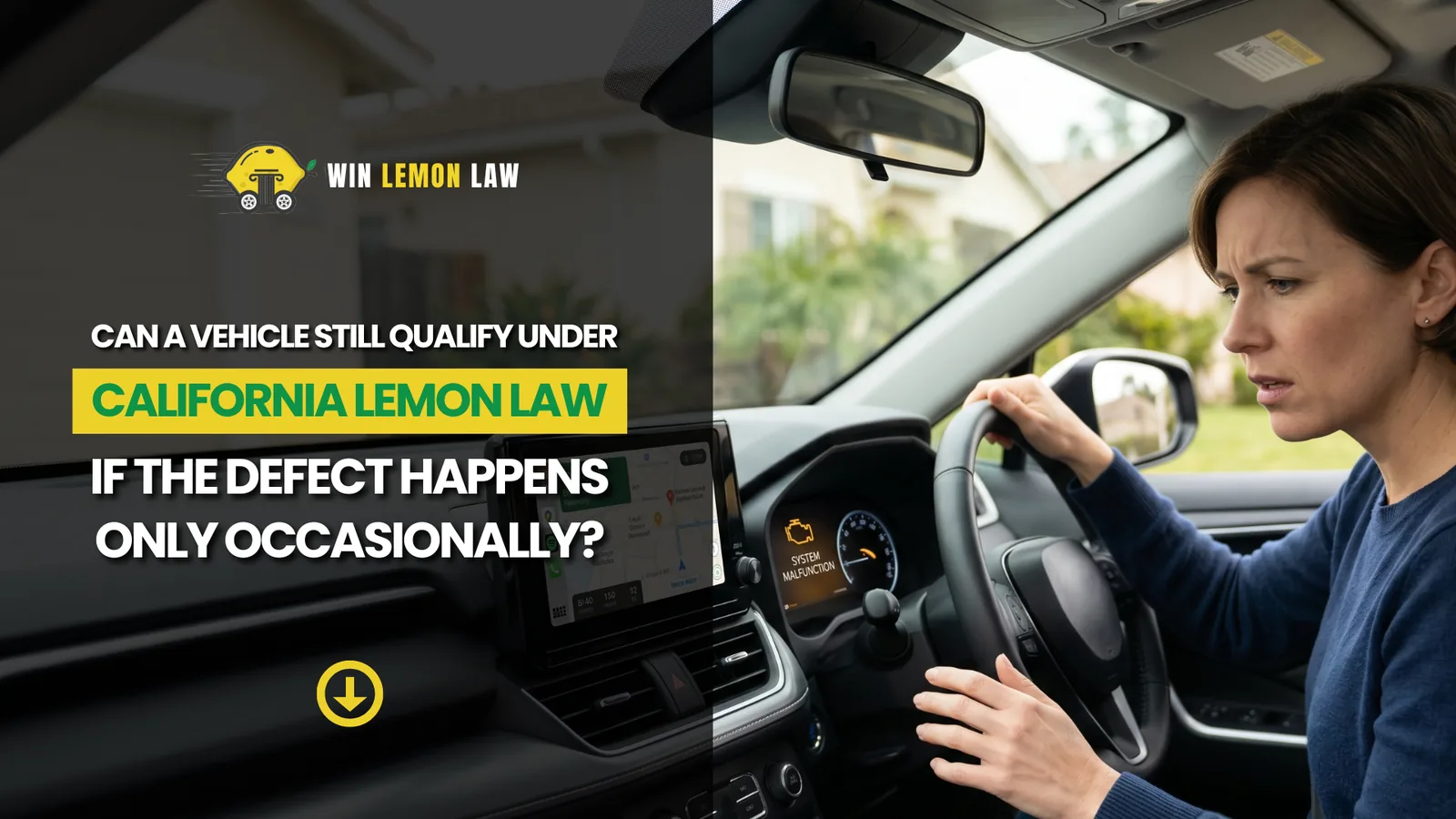
For many vehicle owners dealing with ongoing mechanical or electronic issues, one of the most frustrating responses they hear from a dealership is that no problem was found. A driver may experience warning lights, hesitation, unusual noises, or safety system alerts while driving. However, after bringing the vehicle to the dealership for inspection, the service report may state that technicians could not replicate the issue or that the vehicle appears to be operating normally.
This situation leaves many drivers confused. The problem clearly occurred while they were driving, yet the dealership claims there is nothing wrong. When the issue appears again days or weeks later, the cycle repeats.
In California, this scenario is more common than many consumers realize. Modern vehicles rely on complex electronic systems and software driven components that do not always produce consistent diagnostic results. Even when technicians cannot confirm the problem during inspection, recurring issues may still qualify under California Lemon Law.
Understanding why dealerships sometimes report that no issue was found and what steps drivers should take afterward can help protect your rights and ensure that the problem is properly documented.
Why Dealerships Sometimes Report That No Problem Was Found
Dealership technicians rely on diagnostic tools, system logs, and direct testing to identify vehicle defects. If a problem is not actively occurring during the inspection or does not trigger a stored error code, it may be difficult to confirm.
Many modern vehicles monitor system performance through onboard computers. These systems record faults when certain thresholds are met. If the defect occurs briefly or resolves itself before a diagnostic check, the system may not record a permanent error.
When technicians do not observe the issue during testing and no diagnostic codes appear, the service report may state that the vehicle is functioning normally. This does not necessarily mean the owner’s experience was incorrect. It simply means the issue was not detected during the inspection.
Why Intermittent Problems Are Difficult to Replicate
Many vehicle defects are intermittent. This means they appear only under certain conditions rather than constantly. A warning message may appear briefly and disappear before the driver can schedule service. A transmission hesitation may occur only during specific driving situations.
Because of this unpredictability, the dealership may not experience the issue during a test drive or while the vehicle is connected to diagnostic equipment. If the problem occurs only occasionally, it may take multiple visits before technicians can reproduce it.
Intermittent problems are particularly common with electrical systems, sensors, safety alerts, and software controlled components. These systems rely on precise communication between multiple modules, and even a small error can create temporary malfunctions.
The Role of Vehicle Software and Electronic Systems
Modern vehicles rely heavily on software to control engine performance, safety systems, infotainment features, and many other functions. While this technology provides advanced capabilities, it also introduces new challenges for diagnosing problems.
A software glitch may cause a warning message to appear briefly before resetting itself. Communication errors between sensors may create alerts that disappear once the system recalibrates. These events may not leave permanent evidence within the vehicle’s diagnostic system.
Because technicians rely on stored system data to identify issues, defects that do not generate persistent error codes can be difficult to confirm. As a result, drivers may hear that the vehicle is operating normally even though the problem continues during daily driving.
Why Repeated “No Issue Found” Visits Still Matter
When a dealership reports that no issue was found, many drivers assume that the visit does not count as a repair attempt. In reality, the visit may still be important for documenting the ongoing problem.
Each time a vehicle is brought to the dealership to address the same issue, the manufacturer has an opportunity to diagnose and repair the defect. Even if technicians cannot replicate the problem during that visit, the service record still reflects that the owner reported the issue.
Repeated visits for the same complaint demonstrate that the problem has not been resolved. Over time, this pattern may help establish that the manufacturer had multiple opportunities to correct the defect.
California Lemon Law considers the overall repair history rather than a single successful diagnosis.
Why Documentation Is Essential in These Situations

When a dealership cannot replicate a defect, clear documentation becomes especially important. Repair orders should describe the symptoms reported by the driver, even if the technician did not observe them during testing.
For example, the repair record should mention warning lights, hesitation, unusual noises, or system alerts exactly as the driver experienced them. Accurate documentation helps establish that the issue occurred and was reported to the dealership.
Drivers may also benefit from keeping their own records. Taking photos or videos of warning messages, dashboard alerts, or unusual system behavior can provide valuable evidence.
Recording when the issue occurs, how often it happens, and the driving conditions involved can also help demonstrate that the problem is recurring.
When a Pattern of Problems Begins to Appear
When the same issue continues to appear after multiple service visits, it may indicate a deeper defect within the vehicle. Even if technicians cannot replicate the issue during each inspection, the repeated complaints show that something is not functioning properly.
For example, a vehicle that repeatedly displays engine warnings or safety alerts may have an underlying sensor or software problem. A vehicle that occasionally hesitates during acceleration may have a transmission issue that occurs only under certain conditions.
As the pattern becomes more consistent, it becomes harder for the manufacturer to dismiss the issue as a one time event.
How California Lemon Law Evaluates These Situations
California Lemon Law protects consumers when a manufacturer cannot repair a vehicle defect after a reasonable number of attempts. The law focuses on whether the defect substantially impairs the vehicle’s use, value, or safety.
Importantly, the law does not require that technicians successfully reproduce the defect every time. What matters is whether the owner reported the issue and whether the manufacturer had opportunities to repair it.
Repeated service visits for the same problem may demonstrate that the defect remains unresolved. If the issue continues to affect the vehicle after multiple attempts to diagnose or repair it, the vehicle may qualify as a lemon.
The Importance of Time Out of Service
Another factor considered under California Lemon Law is how long the vehicle has been unavailable due to repairs. If the vehicle spends thirty or more cumulative days in the repair shop for warranty related issues, it may qualify for relief.
Vehicles that repeatedly return to the dealership for diagnostics, inspections, or updates may accumulate significant downtime over time. Even when the dealership cannot identify the issue immediately, the days spent in service still contribute to the total.
Extended downtime can strengthen a lemon law claim by showing that the defect continues to disrupt the owner’s ability to use the vehicle.
Steps Drivers Should Take After Hearing “No Issue Found”
When a dealership reports that no problem was found, drivers should take several steps to protect their interests.
First, ensure that the service record accurately reflects the issue you reported. The repair order should describe the symptoms you experienced rather than simply stating that the vehicle was inspected.
Second, continue documenting the problem if it occurs again. Photos, videos, and written notes can help establish that the defect is ongoing.
Third, return to the dealership if the issue reappears. Each service visit contributes to the repair history and demonstrates that the manufacturer has been given opportunities to resolve the defect.
Finally, consider speaking with a California Lemon Law attorney if the problem continues despite multiple visits.
Why These Cases Are More Common With Modern Vehicles

As vehicles become more technologically advanced, problems that are difficult to reproduce are becoming more common. Electronic systems and software controlled components do not always behave consistently during diagnostics.
This means that many drivers experience real issues that are difficult for technicians to confirm during short inspections. Over time, repeated service visits create a documented history showing that the problem persists.
California Lemon Law recognizes these challenges and focuses on the overall repair history rather than a single diagnostic result.
How Win Lemon Law Helps When Dealerships Cannot Replicate the Problem
At Win Lemon Law, we understand how frustrating it can be when a dealership repeatedly reports that no issue was found even though the problem continues to occur. Our team reviews repair records, service history, and owner documentation to determine whether the vehicle meets the legal standard for lemon law protection.
We analyze patterns of recurring complaints, repeated diagnostics, and the total time the vehicle has spent in service. Even when technicians could not replicate the problem during each visit, the overall history may demonstrate that the defect remains unresolved.
When a case qualifies, we pursue remedies available under California Lemon Law. These may include a vehicle buyback, replacement vehicle, or financial compensation.
California Lemon Law generally requires manufacturers to pay attorney fees and costs in successful cases, allowing consumers to pursue their rights without additional financial burden.
Contact Win Lemon Law for Help With Unresolved Vehicle Defects
If your dealership repeatedly says no issue was found but the problem continues to occur, you may have rights under California Lemon Law. Persistent defects do not disappear simply because technicians could not replicate them during a single inspection.
The experienced California lemon law attorneys at Win Lemon Law can review your repair records, explain your options clearly, and help determine whether your vehicle qualifies for relief.
Contact Win Lemon Law today for a free case evaluation.
Think you have a lemon?
Get a free case review — we only get paid if you win.
Related articles
Nissan CVT and Electrical Failures That Continue After Dealer Repairs
Nissan vehicles have long been known for affordability, practicality, and widespread availability across California. Models such as the Nissan…
Read more March 19, 2026How Safety System Failures Affect Lemon Law Eligibility in California
Modern vehicles are equipped with a wide range of safety systems designed to protect drivers, passengers, and others on the
Read more March 17, 2026Why Intermittent Vehicle Defects Are Some of the Strongest Lemon Law Cases
For many vehicle owners dealing with ongoing problems, one of the most confusing situations occurs when a defect appears only
Read more